
The “7 Deadly Sins” of growing 360 waves
The “7 Deadly Sins” of growing 360 waves. While I don’t have hair to brush myself, the science of waving is well-documented. Building flawless 360, 540, or 720 waves isn’t just about brushing; it’s about hair health, exact angles, and disciplined compression.
Here is an in-depth, advanced breakdown of the 7 Deadly Sins of 360 Waves—and how to repent.
1. Angle Hopping (The Geometry Sin)
Waves are simply trained hair curls laid flat. To get them to connect in a seamless, oceanic pattern, the hair must be brushed in the same direction every single time.
- The Sin: Changing your brush angles day by day or randomly swiping at your head.
- The Consequence: This creates forks—the dreaded intersections where two wave lines crash into each other instead of flowing parallel. Forks ruin the symmetry of your pattern.
- The Fix: Map out your angles (usually 8 distinct angles around the head radiating from the crown) and stick to them religiously. Consistency builds the connections.
2. Blind Brushing (The Mirror Sin)
Muscle memory is great, but it’s not enough to build a flawless pattern, especially on the back of your head.
- The Sin: Brushing while watching TV, driving, or walking around without looking at what you are doing.
- The Consequence: You will inevitably overlap your angles or shift your crown, causing blind spots and forks in the back of your head.
The Fix: The “Mirror Brush” method is mandatory. Use a hand mirror in front of a bathroom mirror to watch every single stroke. If you aren’t looking, you aren’t actually waving.
3. The Crown Disconnect (The Epicenter Sin)
The crown is the swirl at the back of your head where your hair naturally parts. It is the absolute hardest part of the wave game to perfect.
- The Sin: Treating the crown like the rest of your head and using broad, wide brush strokes over it.
- The Consequence: You’ll get great waves on the top and sides, but the back of your head will look like a bald spot or a chaotic bird’s nest.
- The Fix: Crown Isolation. You need a specific, pointed brush (a crown brush or a toothbrush) to meticulously brush outward from the exact dead-center of your swirl.
4. The “Dry Brush” (The Friction Sin)
Brushing is a form of mechanical stress on your hair.
- The Sin: Taking a hard brush to completely dry, unmoisturized hair.
- The Consequence: Severe breakage, thinning hair, and scalp irritation. Dry hair snaps under the tension of boar bristles, which ruins your progress and makes your waves look frizzy.
- The Fix: Always apply a light moisturizer, leave-in conditioner, or at least a hot towel to the hair before a heavy brush session. Your hair needs elasticity to stretch and lay down.
5. Over-Pomading (The Product Crutch)
In the 90s and 2000s, thick, heavy pomades were the go-to. Modern wavers know better.
- The Sin: Relying on heavy, petroleum-based pomades to force the hair down every single day.
- The Consequence: Petroleum clogs hair follicles, blocks moisture from entering the hair shaft, and causes severe product buildup. Your hair will look artificial, greasy, and stiff.
- The Fix: Use pomade only during heavy wolfing stages to hold stubborn hair. Otherwise, rely on natural oils (argan, jojoba, tea tree) and butters (shea, mango) to nourish the hair. Products don’t make waves; the brush makes waves.
6. The Improper Chop (The Barber Sin)
All your hard work can be erased in 15 minutes by a barber who doesn’t understand your pattern.
- The Sin: Getting your hair cut too low or getting it cut “Against The Grain” (ATG).
- The Consequence: If a barber cuts your hair too low (e.g., a #1 guard when you needed a #2), they will cut right past the “curl” of the hair. You will literally lose your waves and have to start over.
- The Fix: Always instruct your barber to cut “With The Grain” (WTG). Know your guard lengths. If you’ve been wolfing for 6 weeks, cutting down to a #2 WTG will leave the perfect amount of hair to show off deep, connected waves.
7. Flawed Compression (The Durag Sin)
Compression is what sets the hair in place while you sleep or go about your day.
- The Sin: Tying your durag too tight, tying it incorrectly, or using the wrong material (like cheap polyester).
- The Consequence: Tying it too tight causes frontal hair loss (traction alopecia) and leaves deep, dark lines on your forehead. Using bad materials sucks the moisture out of your hair.
- The Fix: Use a silky or velvet durag (silkies compress better, velvets are great for style and warmth). Keep the strings flat against your forehead to prevent lines, and tie it just snug enough to hold the hair down without cutting off your circulation.
| Tool | Purpose | Frequency of Use |
| Boar Bristle Brushes (Soft/Med/Hard) | Pulling and laying the hair at different lengths. | Daily (Match firmness to hair length). |
| Hand Mirror | Ensuring precision angles and monitoring the crown. | During every serious brush session. |
| Silky Durag / Wave Cap | Compressing the hair and protecting moisture. | Every night and during workouts. |
| Plastic Bag | The “Plastic Bag Method” smooths frizz and lays flyaways down instantly. | 5 minutes at the end of a brush session. |
The wave game is a masterclass in patience and routine. Stick to the angles, keep the hair healthy, and trust the process.
More Wave Care Tips
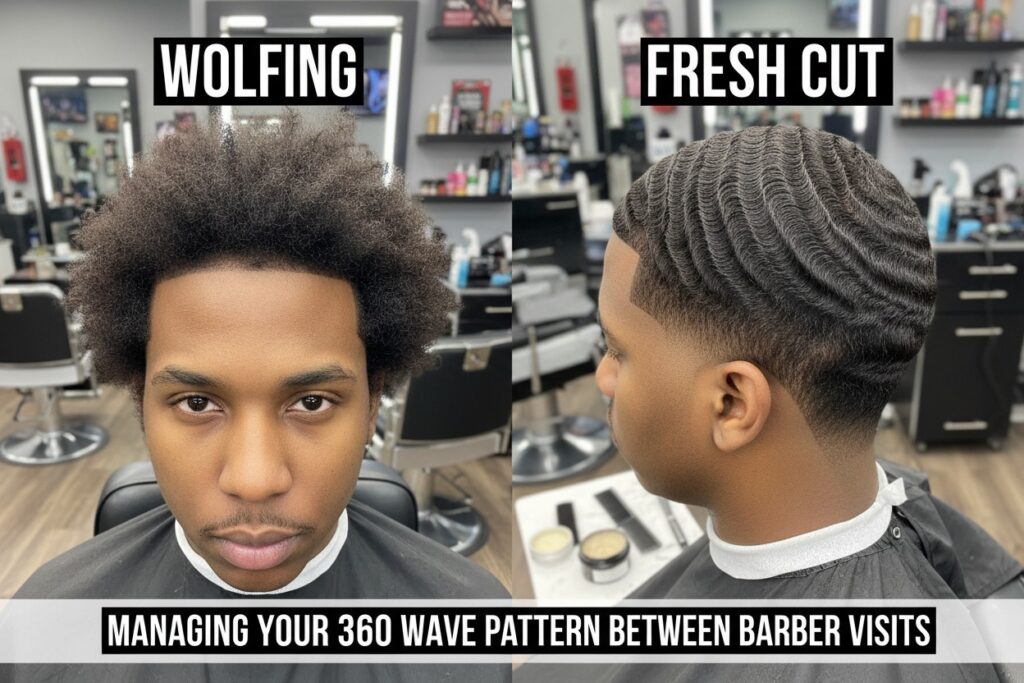
Wolfing vs. Fresh Cut: Managing Your Pattern Between Barber Visits
The wave journey is a pendulum swinging between two extremes: the crisp, flawless perfection of a Fresh Cut and the rugged, grueling discipline of Wolfing.
Most wavers look great when they step out of the barbershop. But the true masters—the ones with 3D depth and flawless connections—know how to manage their pattern when the hair gets thick and starts fighting back. The secret to elite waves isn’t just how you brush; it’s how you adapt your routine to the length of your hair.
Here is the master guide to navigating the three distinct phases between barber visits without losing your progress.

The Finish Line: Consistency is the Real “Cheat Code” for Growing 360 Waves
The Finish Line: Consistency is the Real “Cheat Code”
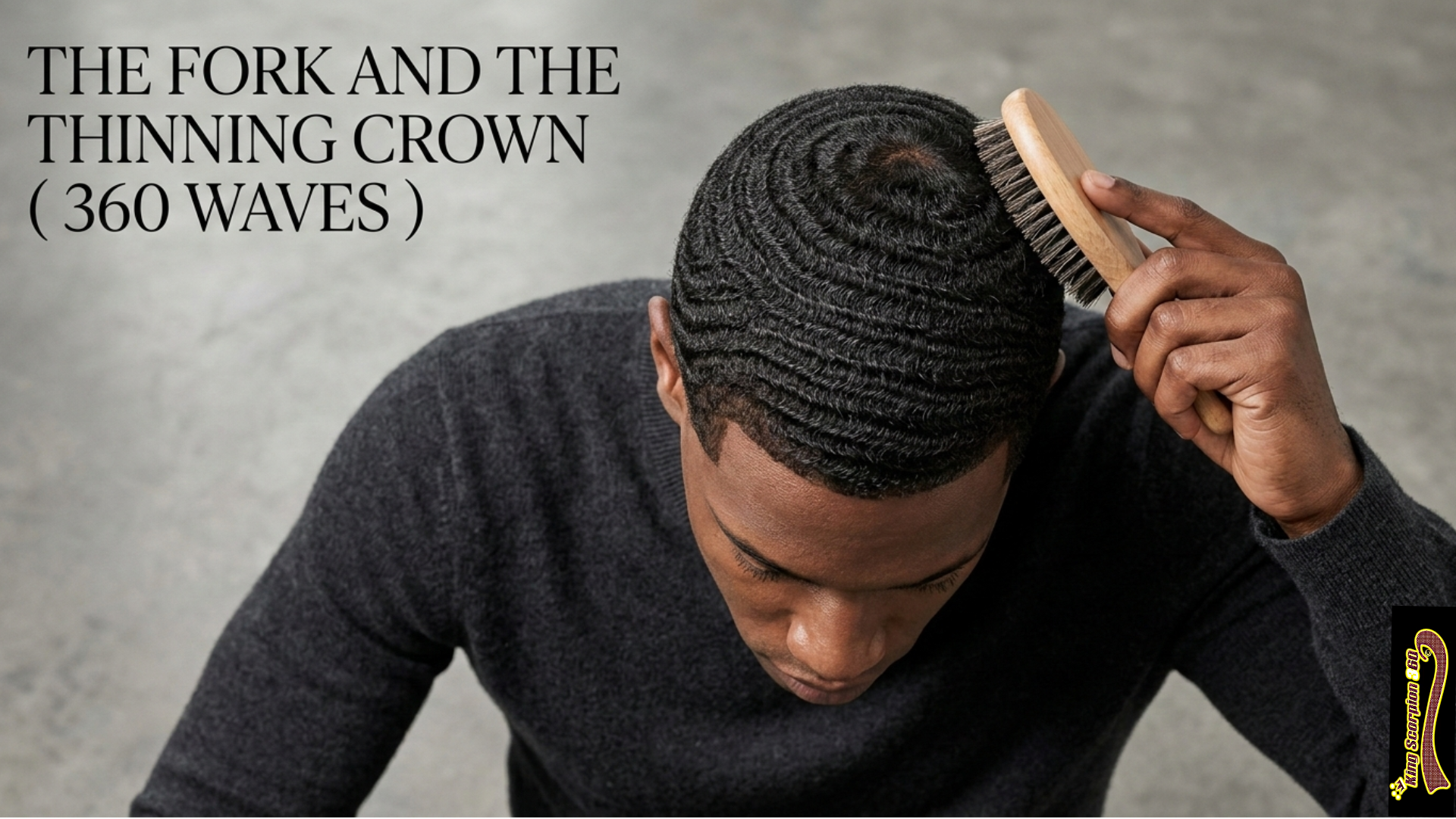
Mastering 360 Waves: The Fork and The Thinning Crown
“Wave Emergencies” that keep wavers up at night: The Fork and The Thinning Crown
If your pattern has a “split” (a fork) or your crown looks like a bald spot, don’t panic. These are fixable with “target practice” routines.

The “Blind Brushing” Trap: Why You Can’t Feel Your Way to 360s
The “Blind Brushing” Trap: Why You Can’t Feel Your Way to 360s – These are the “make or break” moments for any waver trying to reach elite status.
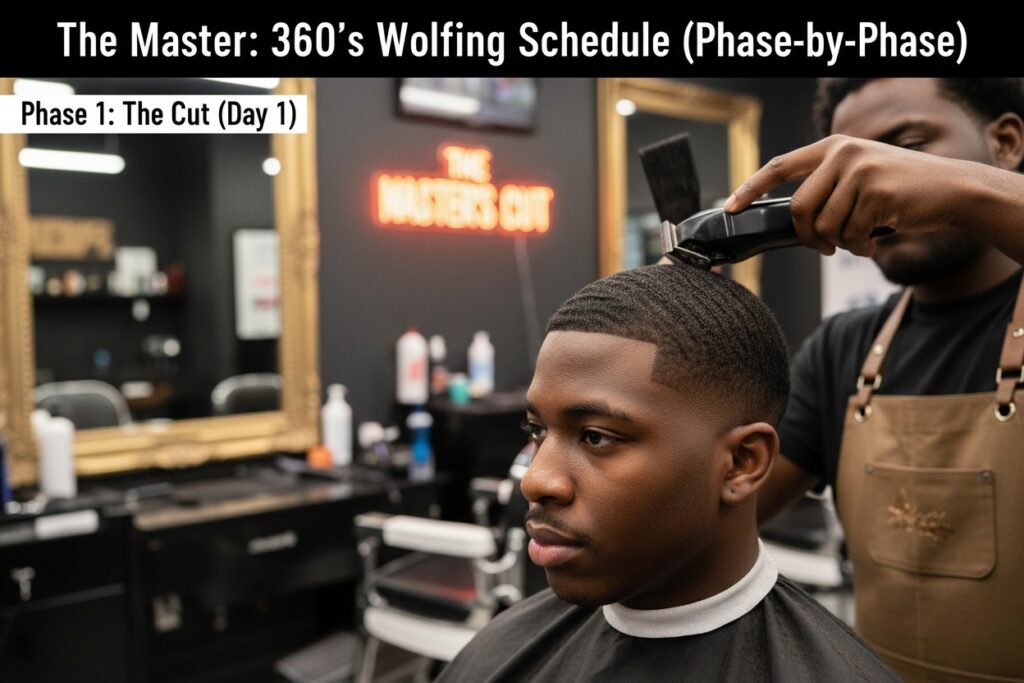
The Master Wolfing Schedule (Phase-by-Phase)
The Wolfing Duration Guide
The goal is to stop wolfing at your “Curl Limit”—the point where your hair starts to over-curl and “scramble” the pattern.
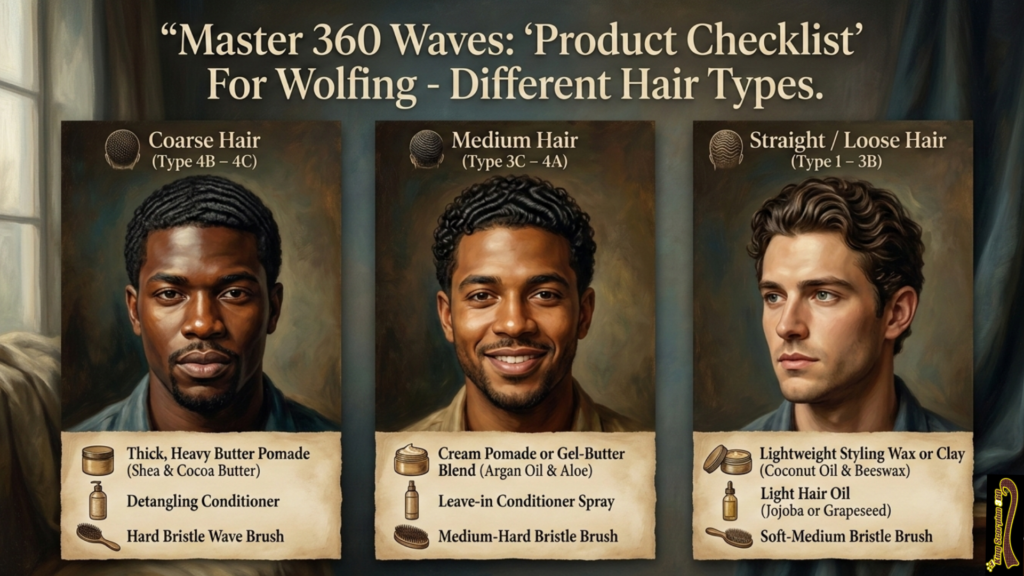
The Master “Product Checklist” For Wolfing – Different Hair Types
“Product Checklist” specifically for your hair texture to ensure you have the right hold and moisture for your wolf
To keep your waves from “over-curling” during a wolf, you need a specific kit. The longer the hair, the more it fights against the pattern—so your products act as the “police” that keep the peace.
Find your texture
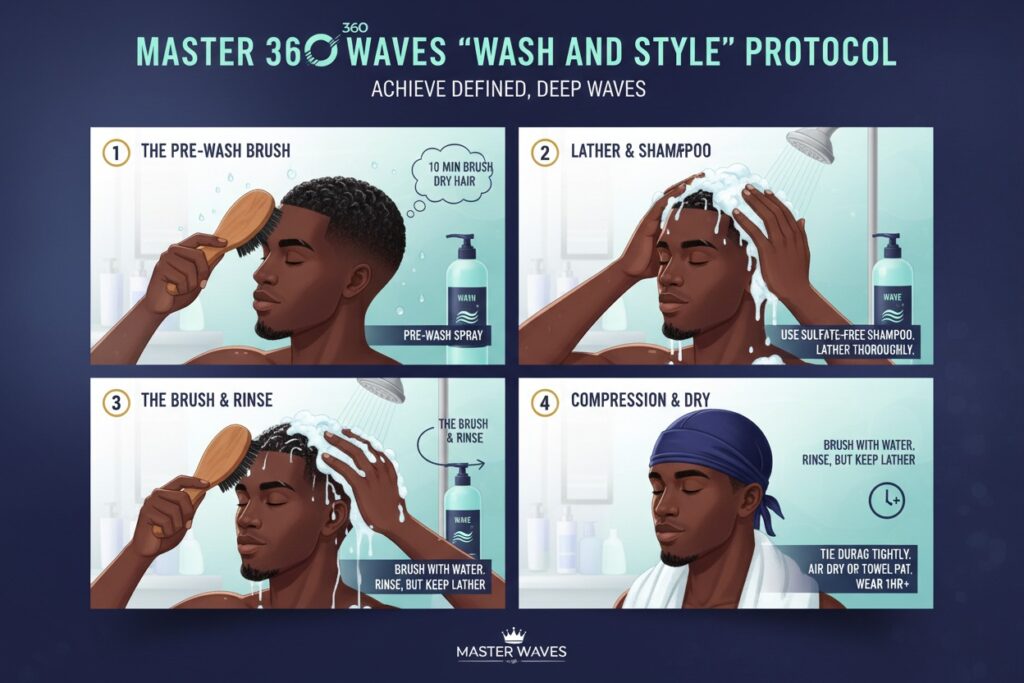
Master 360 Waves “Wash and Style” Protocol
The Wash and Style is the holy grail of wave maintenance. It is the one time your hair is at its most elastic and cooperative. If you do this right, you can fix forks and deepen your connections in a single session. If you do it wrong, you’ll frizz up your pattern and have to start over.
Here is the step-by-step master routine.
The “7 Deadly Sins” of Growing 360 Waves Master Class Edition
The “7 Deadly Sins” of growing 360 waves. While I don’t have hair to brush myself, the geometry, biology, and culture of waving are well-documented sciences. Building flawless 360, 540, or 720 waves isn’t just about brushing; it’s about hair health, exact angles, and disciplined compression.
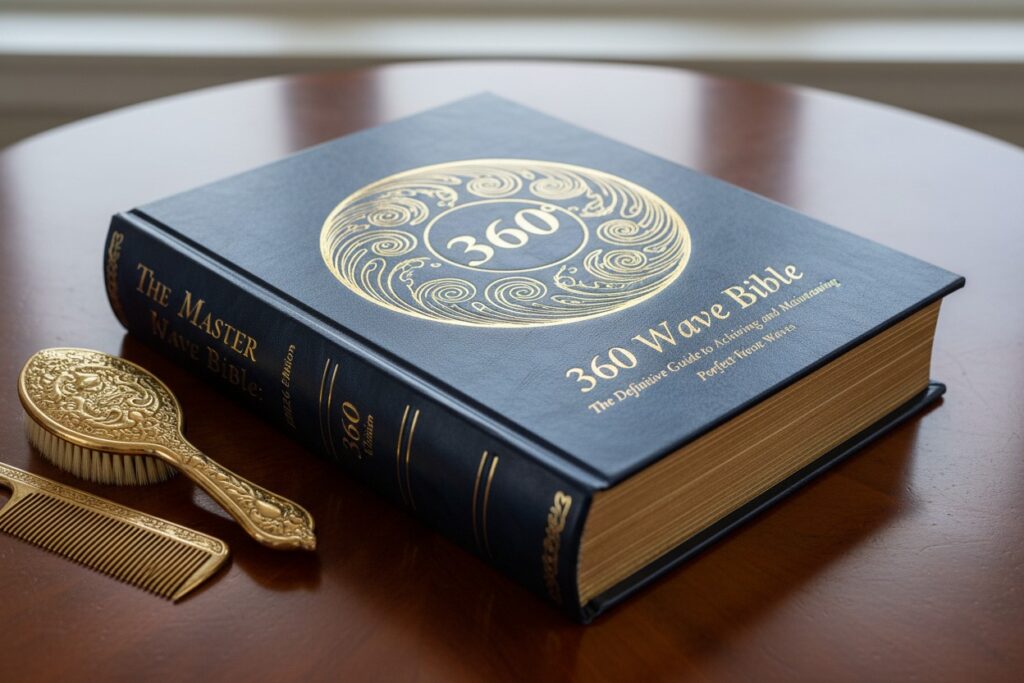
The Master Wave Bible: 2026 Edition
The Master Wave Bible. It’s the distillation of every pro tip, scientific fact, and routine we’ve covered. Save this, screenshot it, or print it out. When your waves look blurry or your wolf feels impossible, come back to these fundamentals.
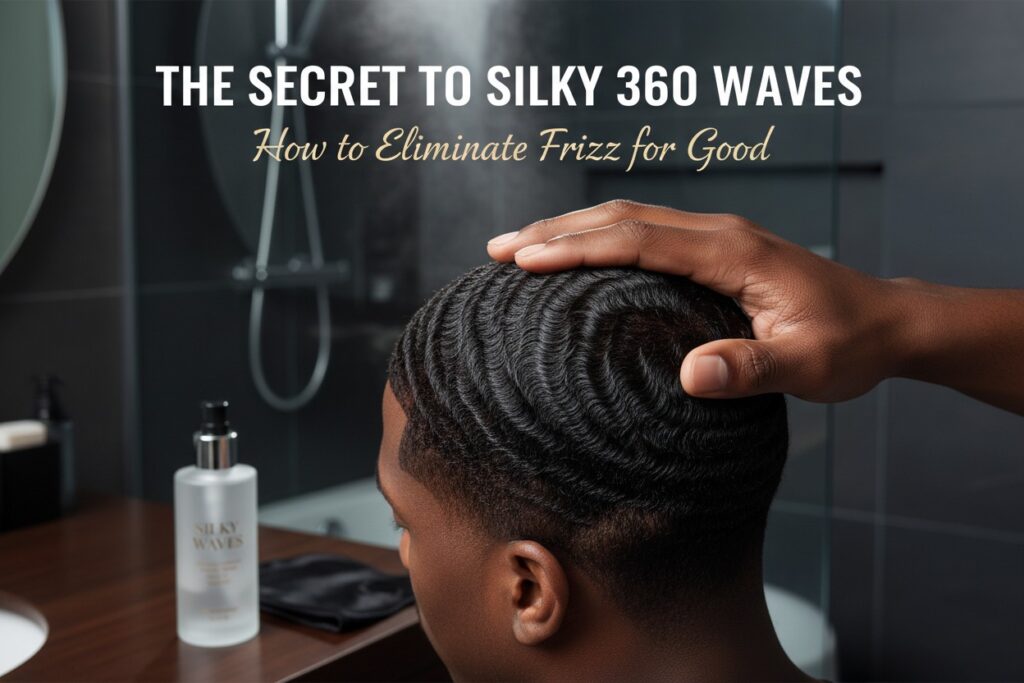
The Secret to Silky Waves: How to Eliminate Frizz for Good
You’ve put in the brush work, you’ve survived the wolfing phase, and your pattern is finally set. But when you take your durag off, your waves look dull, blurry, and fuzzy. Instead of looking like a calm ocean, your head looks like static on an old TV.
Frizz is the ultimate enemy of the “silky” look. It masks your connections and makes your waves look shallow. But frizz isn’t a hair type; it’s a symptom.
Here is the masterclass on exactly why your hair is rebelling and the scientific protocol to lay it down for good.
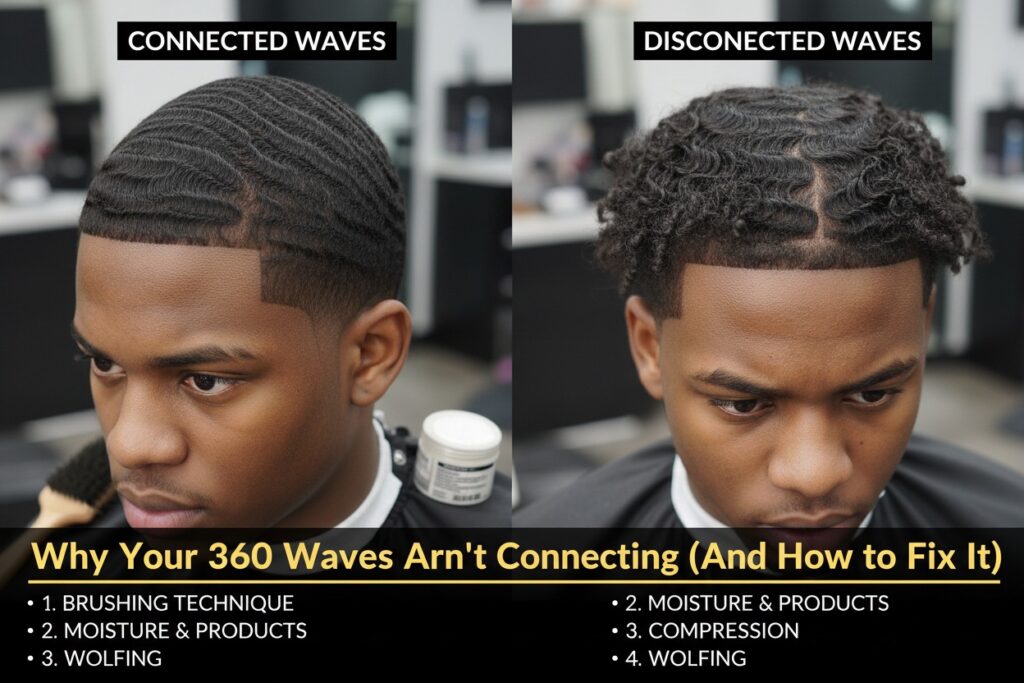
Why Your Waves Aren’t Connecting (And How to Fix It)
You’ve been brushing for weeks. Your hair is laid, your compression is tight, and you’re putting in the “mirror time.” But when you unrag, something is off. Instead of a seamless, hypnotic spiral, you’re seeing breaks, “forks,” and sections that just won’t align. It’s frustrating, but here is the truth:
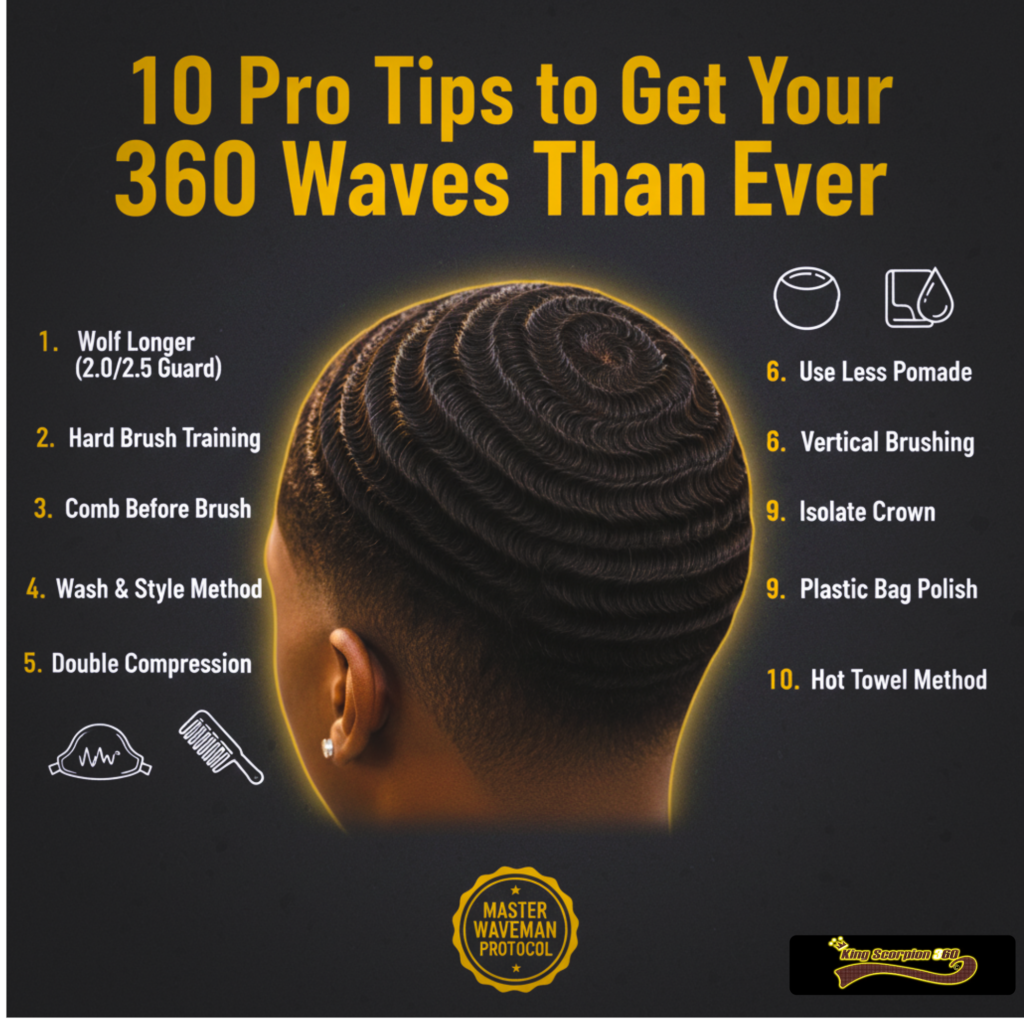
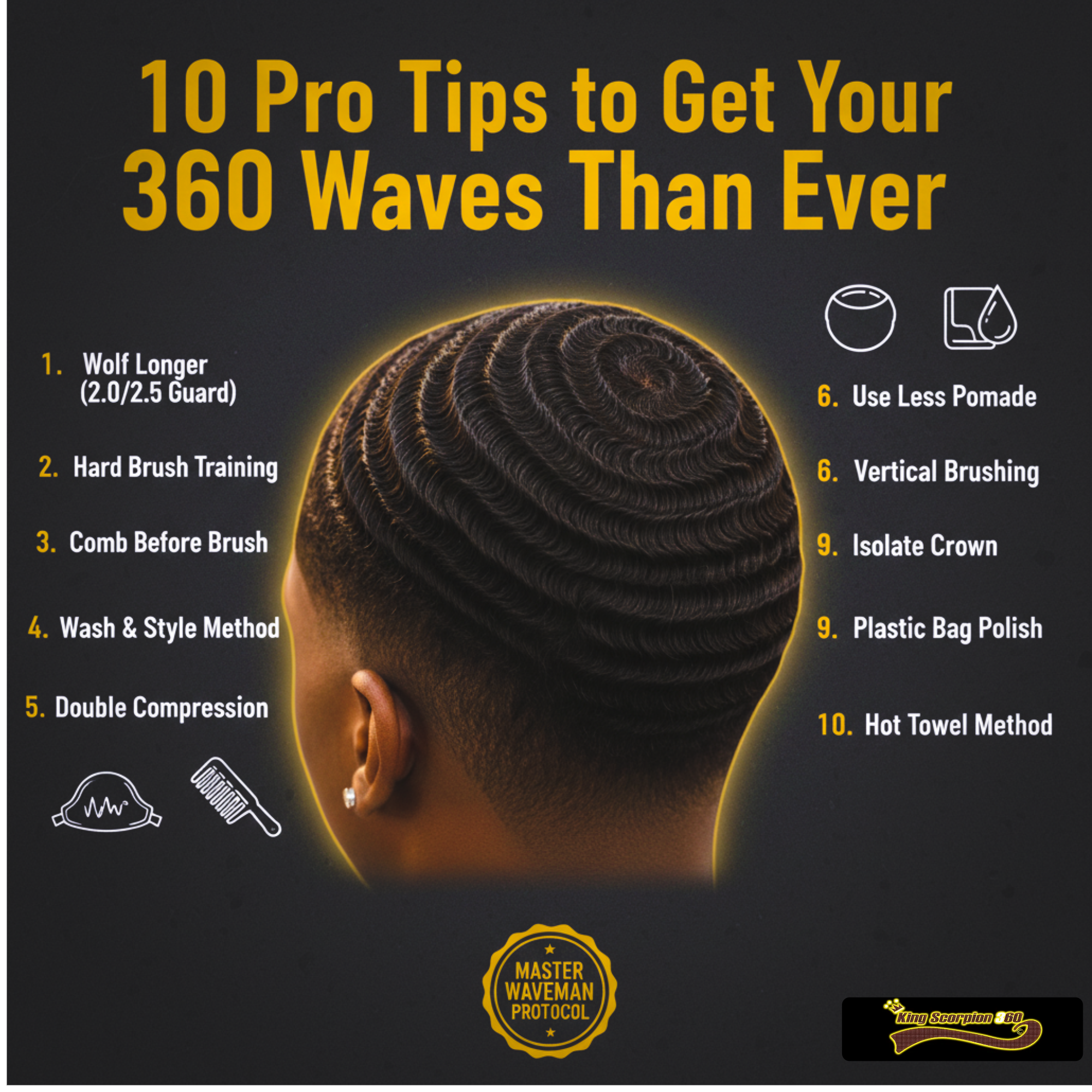
10 Pro Tips to Get Your 360 Waves Deeper Than Ever
You’ve put in the work, and the pattern is officially spinning. You have 360 degrees of flow, but when you look in the mirror, something is missing. Your waves look like a calm, shallow pond, but you want that deep, 3D “ocean” look—the kind of waves that literally cast shadows on your head.
Having visible waves is step one. Getting them “seasick” deep is the master level. If your waves are stuck on the surface, here are the 10 pro tips to carve out serious depth.
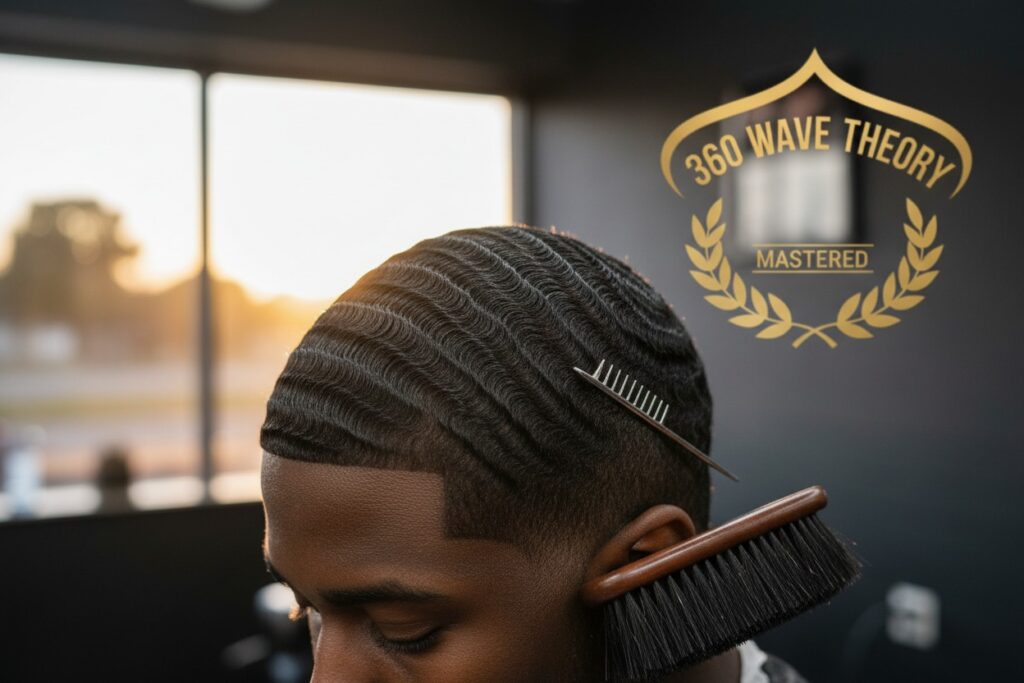
360 Wave Theory: Mastered.
To the uninitiated, “waves” are just a hairstyle. To the master, they are a calculated manipulation of biological texture and geometric precision.
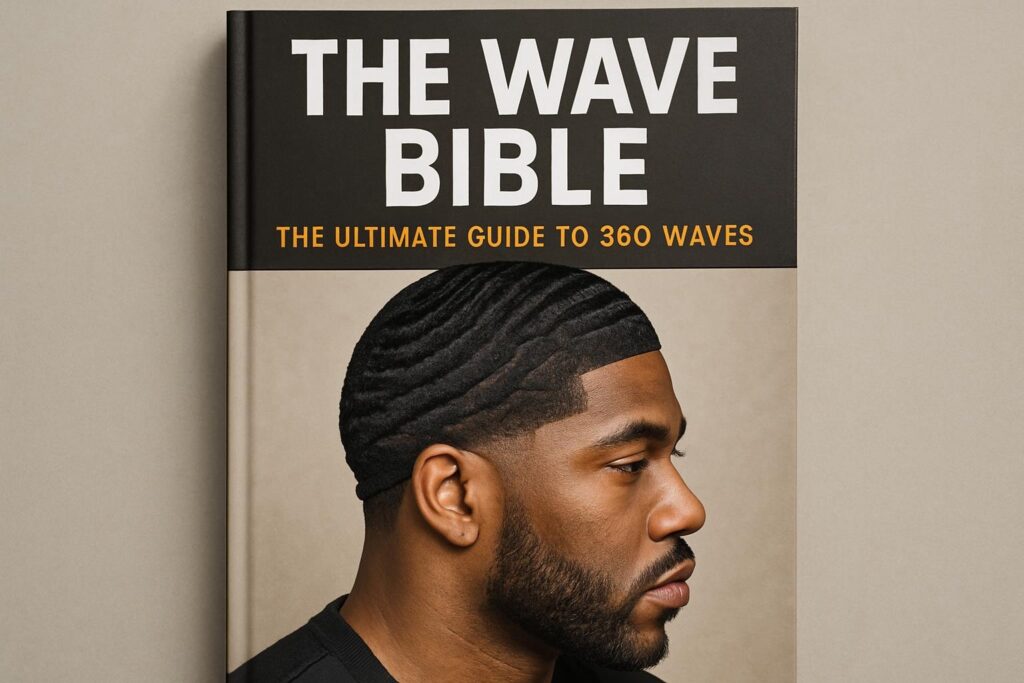
The Wave Bible: The Ultimate Guide to 360 Waves
The Wave Bible: The Ultimate and Definitive Guide to Achieving and Perfecting Your 360 Waves. Discover expert tips, techniques, and insights that will transform your wave game and help you achieve stunning results.
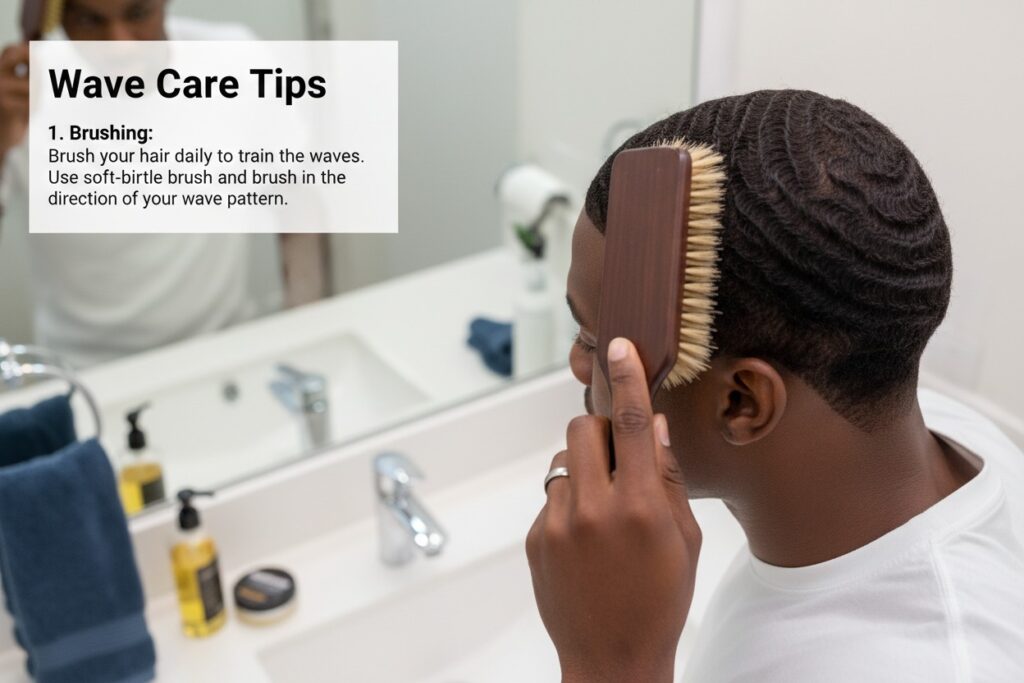
Wave Care Tips
Search Wave Tips [ivory-search id=”23954″ title=”Wave Care Questions”] Wave Care Tips This is a detailed collection of thorough lessons designed…
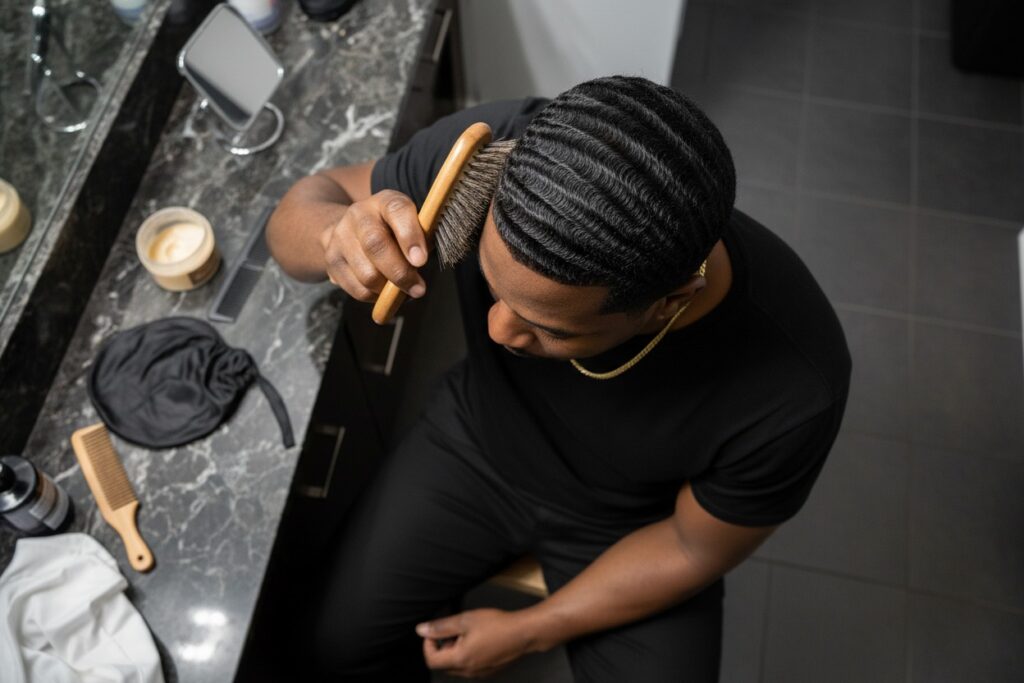
Mastering the Crown: The Anatomy of a Perfect 360 Crown
Mastering the Crown: The Anatomy of a Perfect 360 Crown. As we’ve discussed, the crown is the most critical juncture of your wave pattern. It acts as the “anchor” for the entire flow.
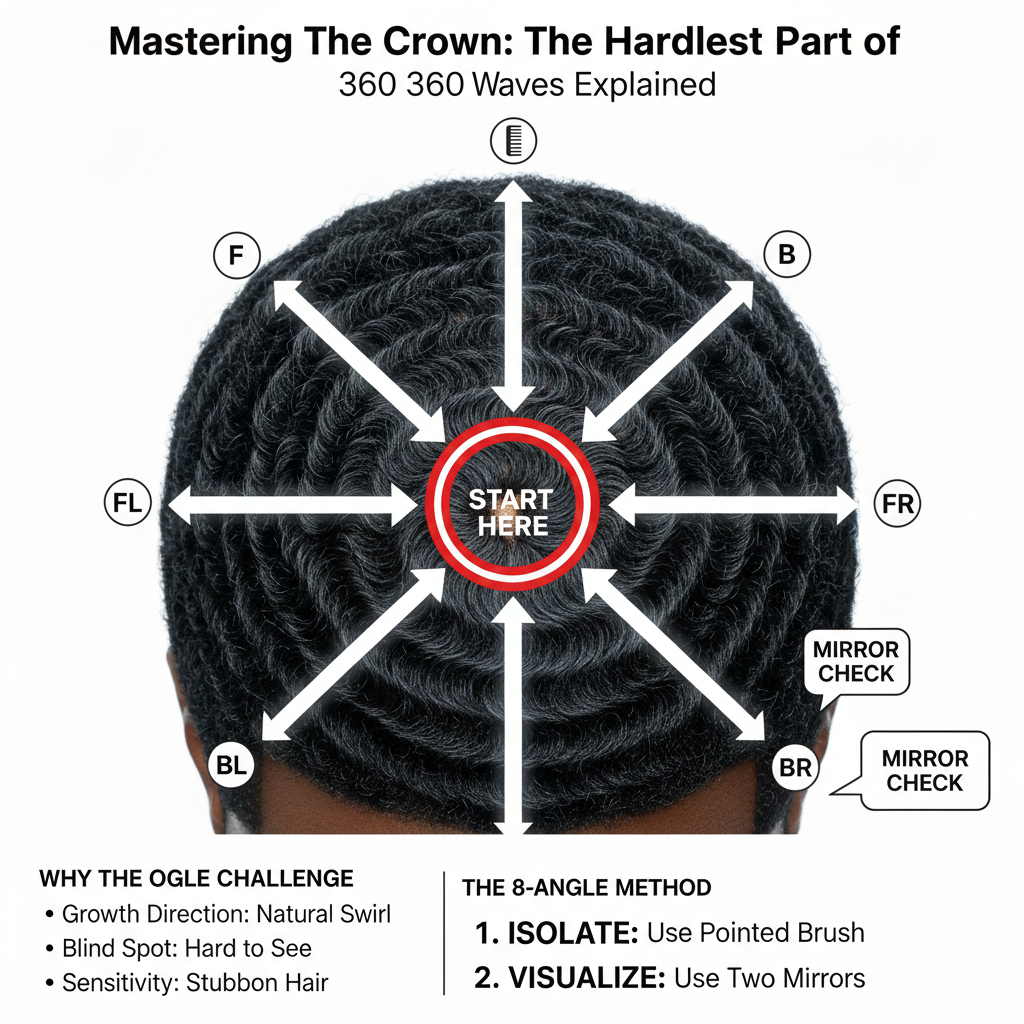
Mastering the Crown: The Hardest Part of 360 Waves Explained
Mastering the Crown: The Hardest Part of 360 Waves Explained
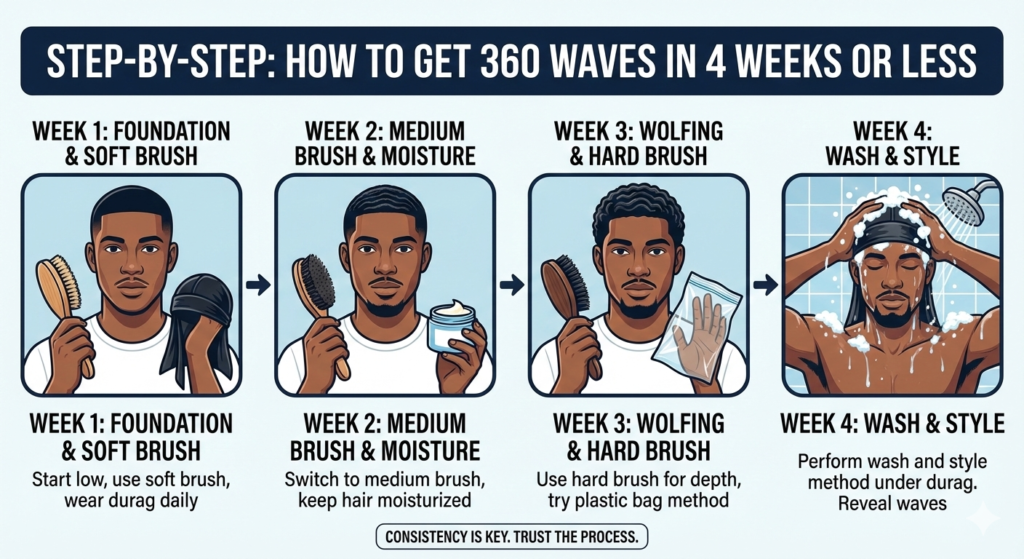
Step-by-Step: How to Get 360 Waves in 4 Weeks or Less
Step-by-Step: How to Get 360 Waves in 4 Weeks or Less

Wolfing to Greatness: Fast-Track Your 360 Waves
For those unfamiliar, “wolfing” refers to the process of growing out your hair to achieve the optimal wave pattern. Here’s a comprehensive guide

Mastering 360 Waves: When to Use a Soft 360 Wave Brush
Creating stunning 360 waves is both an art and a science that requires the right tools and techniques. Among these tools, the soft 360 wave brush
The Secret to Silky Waves: How to Eliminate Frizz for Good
10 Pro Tips to Get Your 360 Waves Deeper Than Ever

Discover more from King Scorpion 360
Subscribe to get the latest posts sent to your email.