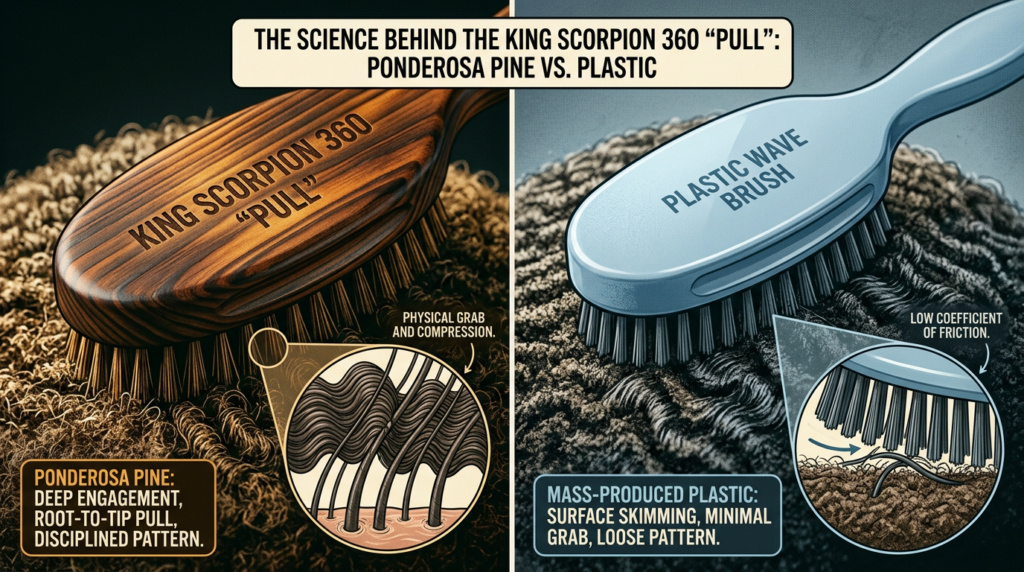
In the world of elite 360 waves, the “pull” is everything. It is the tactile sensation of a brush grabbing hair from the root and shifting it into a disciplined pattern. While mass-produced plastic brushes dominate the shelves of big-box retailers, serious wavers and master craftsmen are increasingly turning toward a more traditional, high-performance material: Ponderosa Pine.
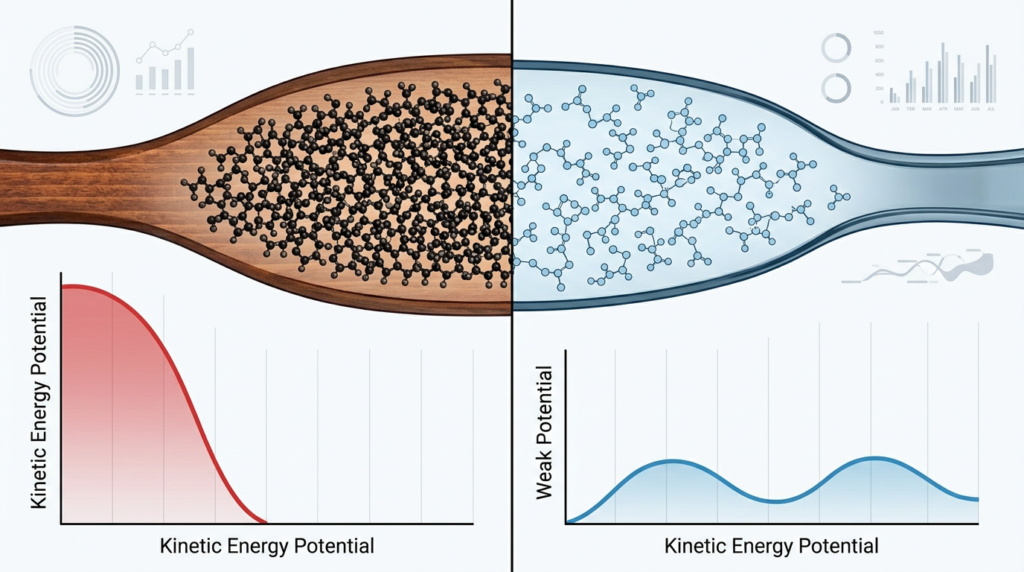
But why does a King Scorpion 360 feel fundamentally different than a standard plastic brush? The answer lies in the intersection of physics, material science, and the specific anatomy of the King Scorpion design.
The Density Dilemma: Why Plastic Fails the Pattern
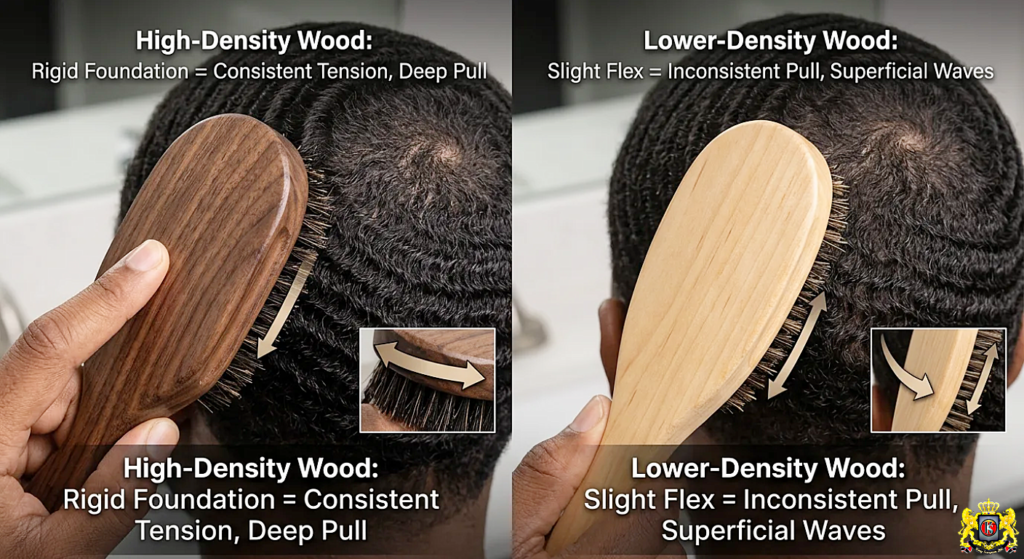
Most commercial wave brushes are made of injection-molded plastic. Plastic is non-porous and lightweight, which sounds convenient, but it lacks structural dampening.
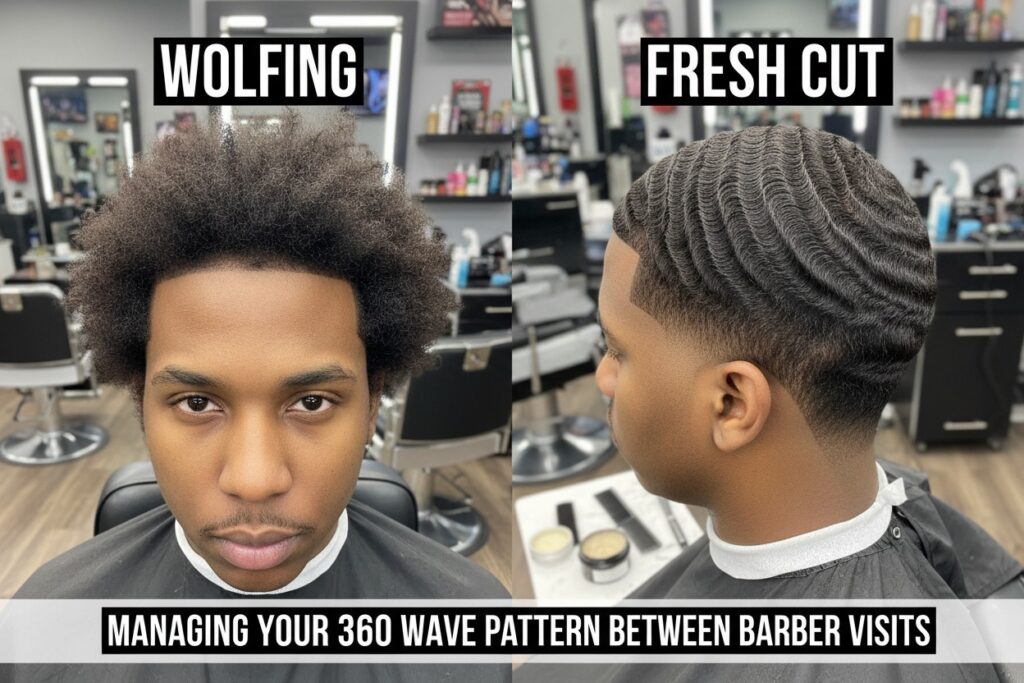
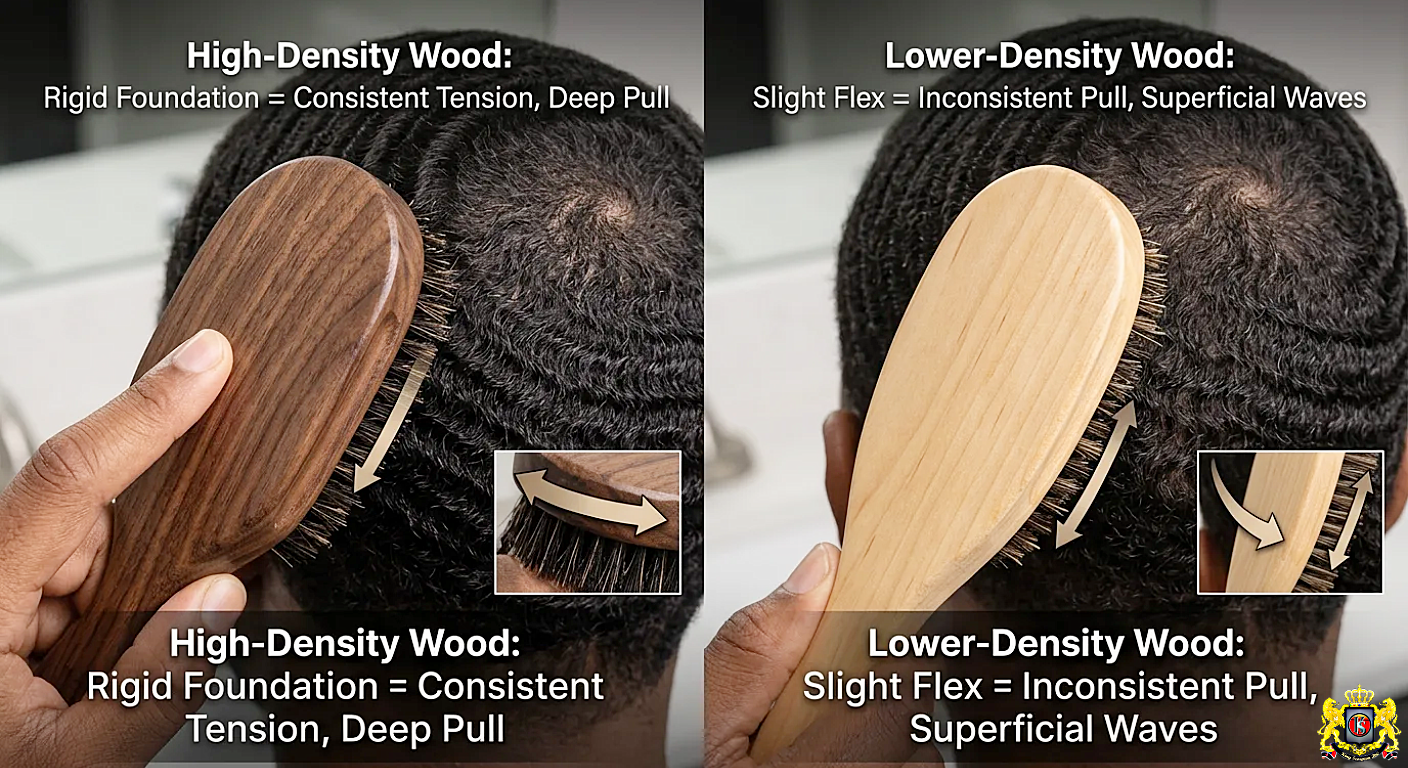
When you apply pressure during a heavy wolfing stage, a plastic handle can subtly flex. This microscopic “give” creates an inconsistent stroke. Furthermore, plastic handles are often hollow or low-density, resulting in poor weight distribution. Without a solid center of gravity, the brush skims across the top of the hair rather than “digging” into the sub-layers where the deep waves are formed.
The Ponderosa Advantage: Tension and Torque
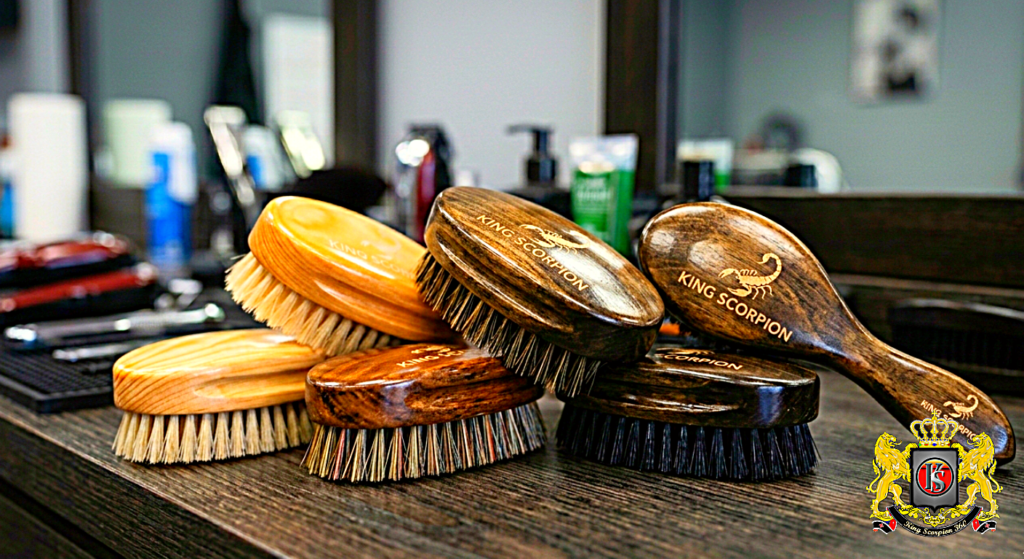
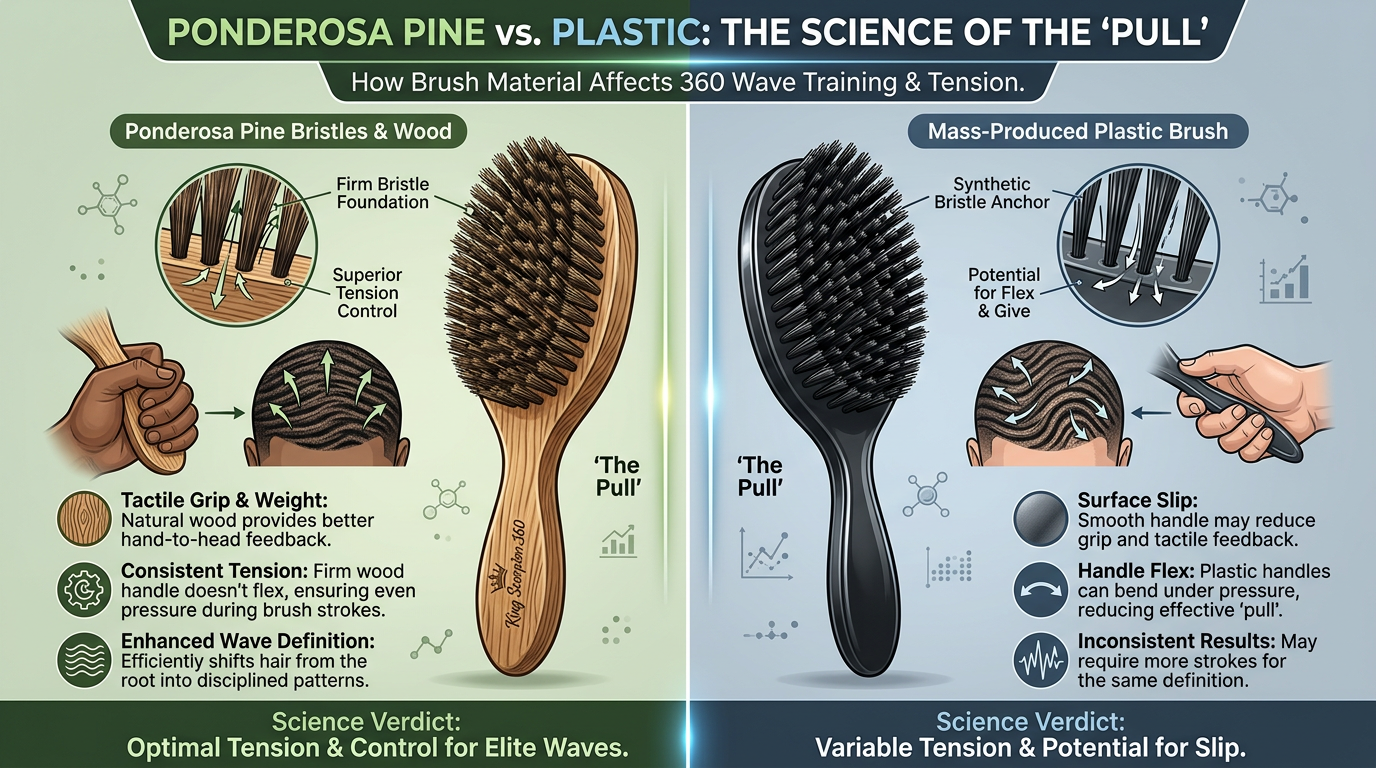
The King Scorpion 360 utilizes Ponderosa Pine—a wood prized by craftsmen for its unique balance of strength and weight.
- Natural Vibrancy: Unlike plastic, wood is an organic, fibrous material. These fibers act as a natural shock absorber. When the bristles meet the resistance of coarse hair, the Ponderosa Pine body absorbs the tension, allowing for a smoother, more rhythmic stroke that doesn’t “snap” back against the scalp.
- The Weight-to-Pull Ratio: Ponderosa Pine provides a specific “heft” that plastic cannot replicate. This weight acts as a natural lever. When you move the brush, the mass of the wood provides the torque necessary to pull thick hair into a curve without requiring the user to press down too hard, which protects the scalp from irritation.
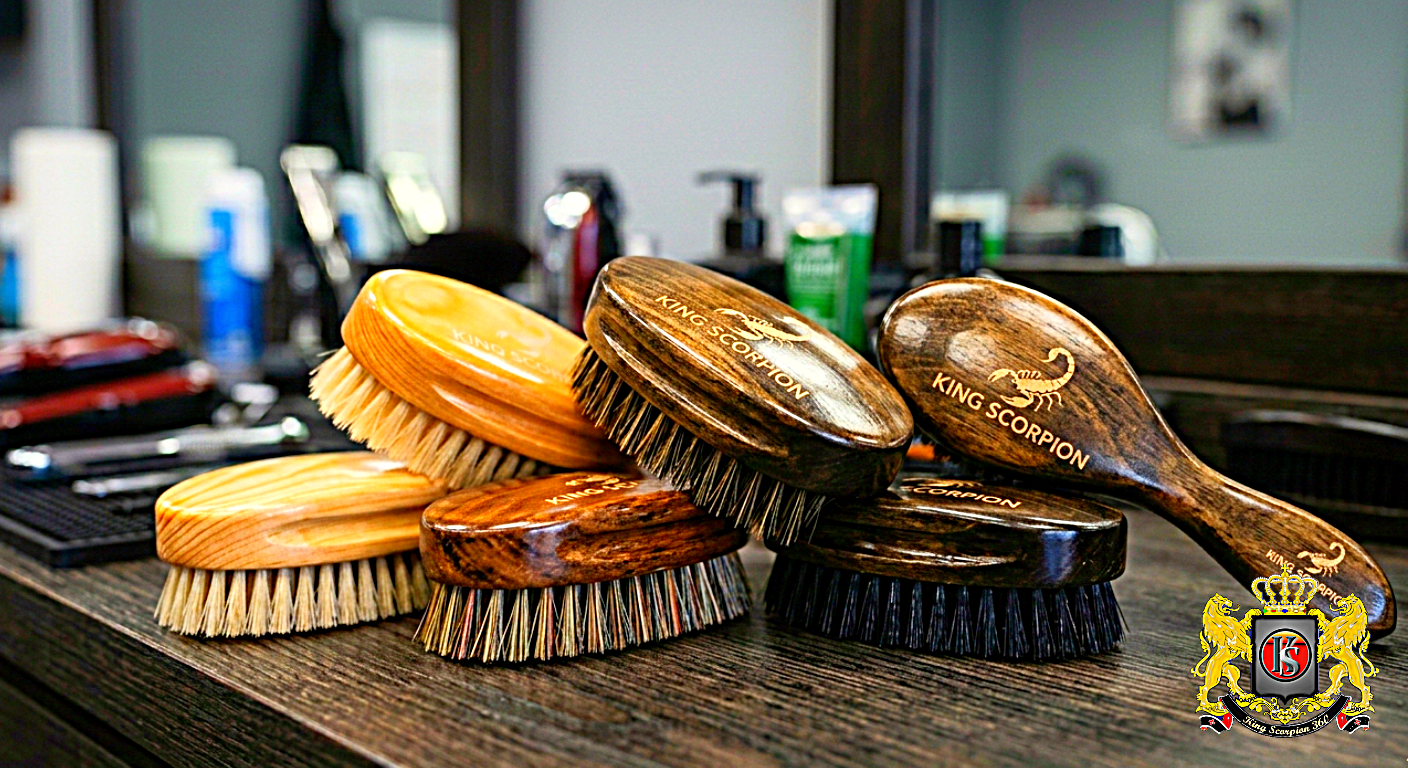
- Contoured Precision: Because these brushes are handcrafted, the wood can be carved into a specific contour that matches the curvature of the human skull. This ensures that every bristle—from the center to the edge—makes contact at the same time, maximizing the efficiency of every single stroke.
The Anatomy of the Pull: 100% Premium Boar Bristles
A masterpiece is only as good as its components. While the wood provides the “engine,” the bristles are the “tires” that grip the road.
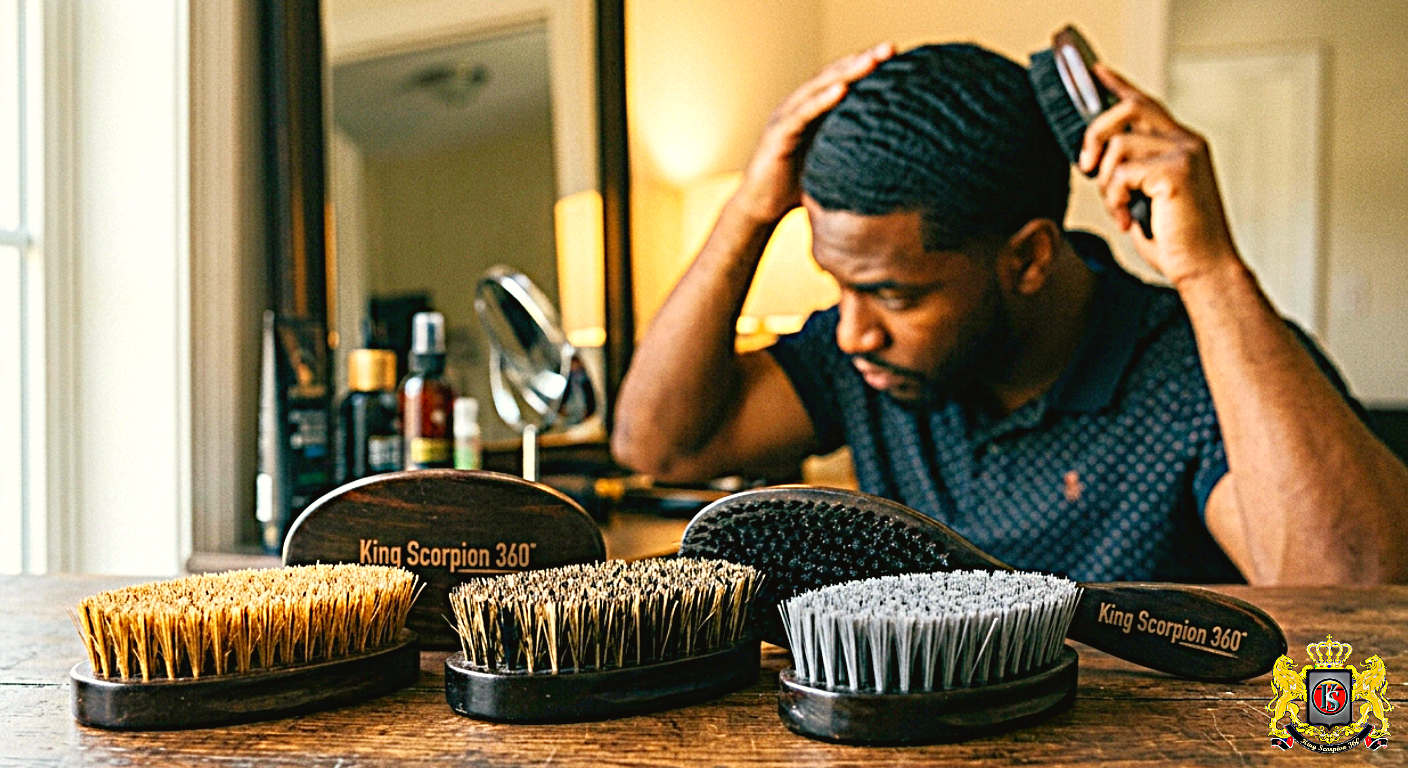
King Scorpion 360 brushes utilize 100% premium boar bristles, and the difference is visible under a microscope.
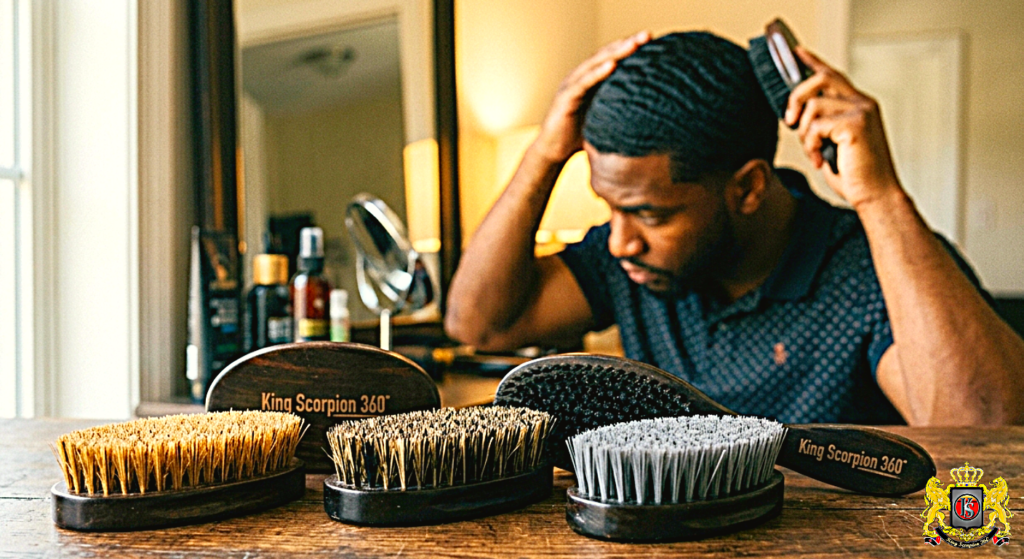
- The Cuticle Grip: Synthetic nylon bristles are perfectly smooth. They slide over hair. Boar bristles, however, have a microscopic scaly texture similar to human hair. This creates a “hook and loop” effect that literally grabs the hair strand, providing the legendary “pull” required to move stubborn forks.
- Sebum Distribution: Boar bristles are naturally porous. They pick up the scalp’s natural oils (sebum) and redistribute them down the hair shaft. This doesn’t just make the waves look shiny; it keeps the hair elastic. Elastic hair is easier to train than dry, brittle hair.
- The Staggered Bed: In a handcrafted King Scorpion, the bristles are often placed in a staggered, reinforced pattern. This prevents the “clumping” common in plastic brushes, ensuring that the brush reaches all the way to the scalp even during a 6-week wolf.
The Verdict: Craftsmanship vs. Commodity
The “pull” of a King Scorpion 360 isn’t a marketing gimmick—it’s the result of pairing high-density Ponderosa Pine with the natural gripping power of boar hair. While a plastic brush might get you ripples, a wooden masterpiece is designed for the long-term training of an elite pattern.
In the battle of Ponderosa vs. Plastic, the winner is clear: Science favors the craft.
Comparing Brush Materials: The Science of the “Pull”
When choosing a wave brush, the material of the handle isn’t just about looks—it dictates the physics of your session. Here’s how common materials stack up against the professional standards of high-end wood like Ponderosa Pine.
| Feature | Ponderosa Pine (Professional) | Beech / Maple (Standard) | Reinforced Plastic (Budget) |
| Density & Weight | High: Heavy enough to provide natural downward pressure. | Medium: Reliable but requires more manual force. | Low: Very light; requires significant hand pressure. |
| Energy Transfer | Direct: Minimal vibration; all power goes to the bristles. | Moderate: Some energy is lost in the handle flex. | Diffused: Handle “gives” under pressure, weakening the pull. |
| Tactile Feedback | Superior: You can feel the hair texture through the grain. | Good: Decent vibration transfer to the hand. | Poor: Feels “numb”; hard to detect forks by feel. |
| Moisture Response | Resilient: Specialized oils/seals prevent warping. | Vulnerable: Can crack or “breathe” if not dried properly. | Immune: Completely waterproof but prone to slipping. |
| Aesthetic | Vintage Luxury: Deep grains and handcrafted finish. | Utility: Clean, mass-produced look. | Industrial: Often neon or matte; utilitarian. |
More 360 Waves Tips
.