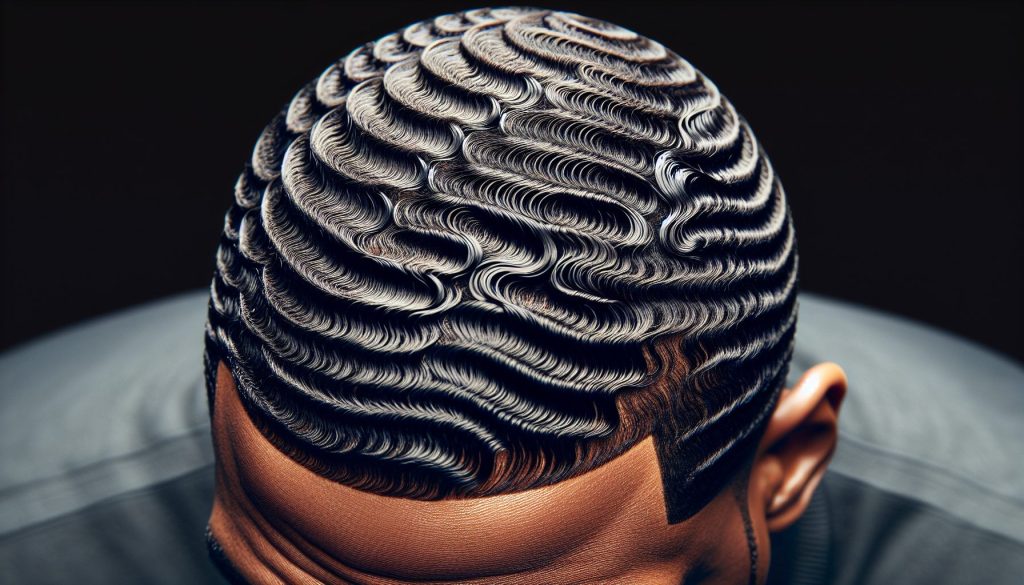
Achieving Perfect 360 Waves: A Guide to Dedication and Skill
Mastering Perfect 360 Waves: Dedication, Skill, and the Right Techniques (Authentic)
Achieving perfect, connected, 360-degree waves isn’t just a haircut; it’s an art form. It is one of the most visible statements of dedication in male grooming, a subtle flexing of patience and precise technique. When you see a set of waves that are deep, clean, and perfectly aligned, you are looking at weeks, often months, of consistent effort.
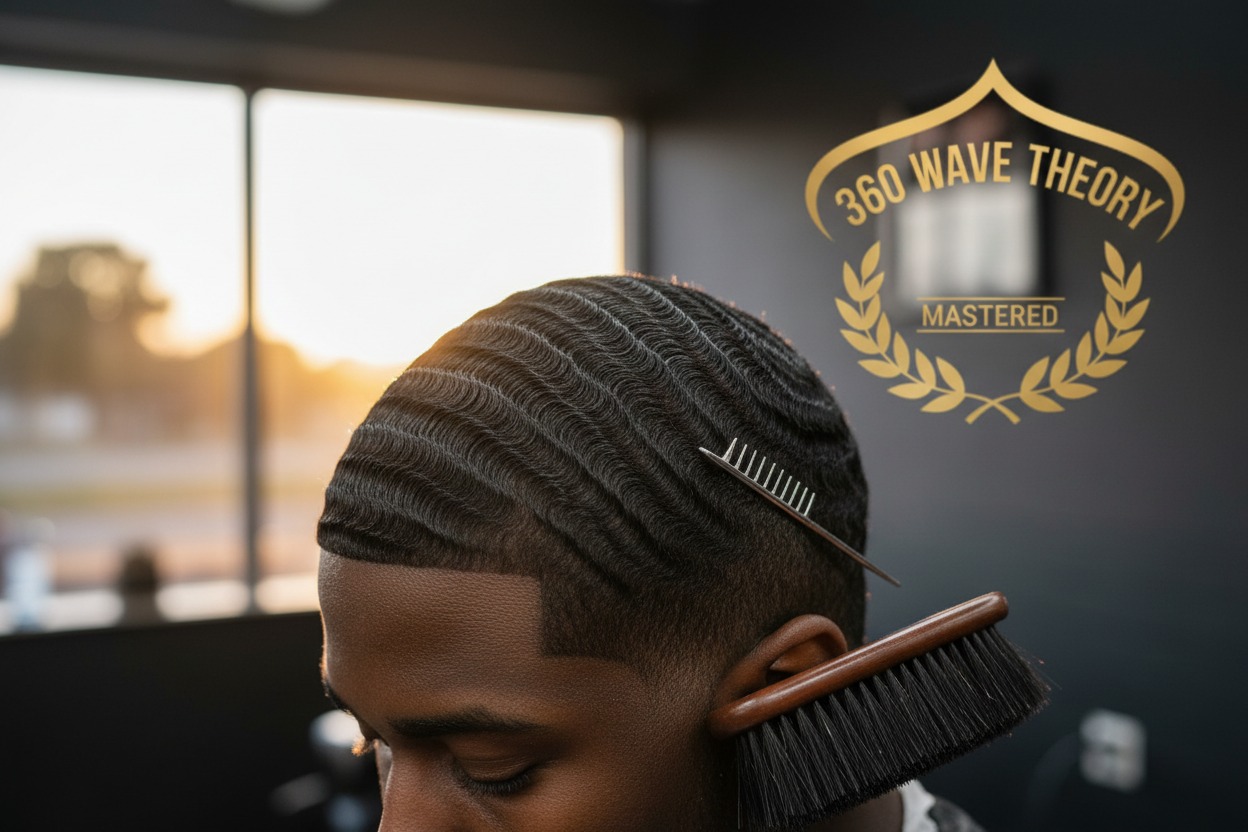
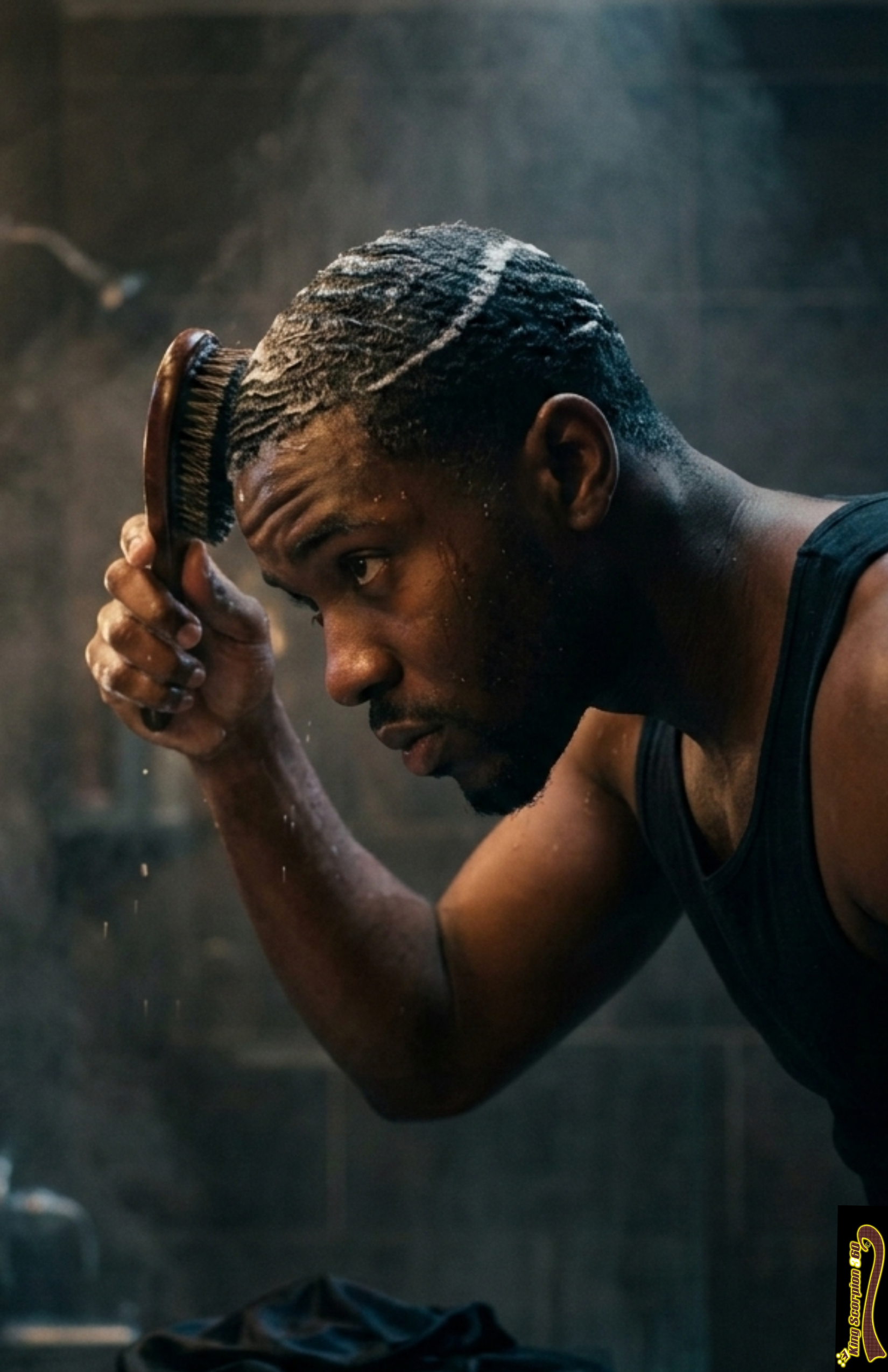
The image above captures a crucial, active moment in this journey. The steam is rising, the product is applied, and the focus is intense. This isn’t a passive act of styling; it is the protocol. To achieve that level of texture and definition, you must master a system that balances hydration, compression, and—above all—brushing.
Here is the authentic guide to mastering perfect 360 waves.
Phase 1: The Foundation — Understanding Your Canvas
Before you even pick up a brush, you must understand your hair. 360 waves are created by laying down the natural curl pattern of textured hair (typically type 3 or type 4). You are essentially “training” your curls to elongate and lie flat, stack upon one another, and ripple around your head.
1. The Right Starting Length
You cannot create waves in hair that is too short. Your starting canvas should be roughly a 1.5 to 2 guard cut. This gives the hair enough length to curl, allowing the wave pattern to take root. If your hair is currently a low bald fade, your first step is simply to let it grow.
2. The Right Barber
Your relationship with your barber is vital. A skilled wave barber understands how to cut with the grain of your established pattern. A bad cut can reset weeks of progress. Tell them you are waving. A taper on the sides and back will help establish the 360 connection.
Phase 2: The Core Habit — Brushing is Everything
Brushing is the absolute engine of the waving process. Brushing is not just for styling; it is the training mechanism. When you brush, you are pulling and elongating that curl pattern. You are training the hair cuticle to lie in a specific direction.
The image shows the subject using a curved palm brush. This is excellent for maintaining consistent pressure across the contours of the scalp.
1. The Brush Arsenal
You need more than one brush. Your needs change throughout your wave journey:
- Hard Brush (Boar Bristle): Used when your hair is thickest (e.g., during “wolfing” phases) to reach the scalp and lay down the foundational layers.
- Medium Brush: The all-purpose brush. Used daily when your hair is at a medium length. It is the perfect balance of firmness and comfort.
- Soft Brush: Used for finishing sessions, laying down stray hairs, and polishing the final look. Essential for achieving maximum shine.
2. Mastering the Angles (Avoid the Forks!)
This is where skill comes in. You must brush in the same direction thousands of times. If your angles are inconsistent, you create “forks”—breaks in the continuous wave line.
A consistent routine is:
- Front: Straight down toward your forehead.
- Sides: Diagonally forward toward your face.
- Back: Straight down toward your neck.
- Crown: This is the center swirl. Brush in a spiraling pattern outwards from the center.
Phase 3: The Secret Sauce — Moisture and Compression
You can brush all day, but if your hair is dry and you don’t use compression, you will not have waves. Water is your best friend. Moisturized hair is pliable and “trainable.” Dry hair is brittle and will resist the brush.
1. The Hydration Routine
Do not rely on thick, greasy pomades to “create” waves. Pomades are for hold, not moisture. Waves need to be hydrated from within.
- The L.O.C. Method: Liquid (Water), Oil (to seal moisture, e.g., jojoba or argan oil), and Cream (a moisturizer). Use this method daily.
- Water is Key: The image shows steam and water droplets. Wetting the hair makes it extremely responsive to the brush.
2. The Power of Compression (Durags and Wave Caps)
This is non-negotiable. Once you finish a brushing session and your hair is moisturized, you must apply compression to “lock in” the work. This keeps the hair compressed as it dries, training the pattern to stay flat.
- Silky Durags: Provide the smoothest finish and best compression.
- Wave Caps: Excellent for double compression, especially during wolfing.
Phase 4: The Advanced Protocol — The “Wash and Style”
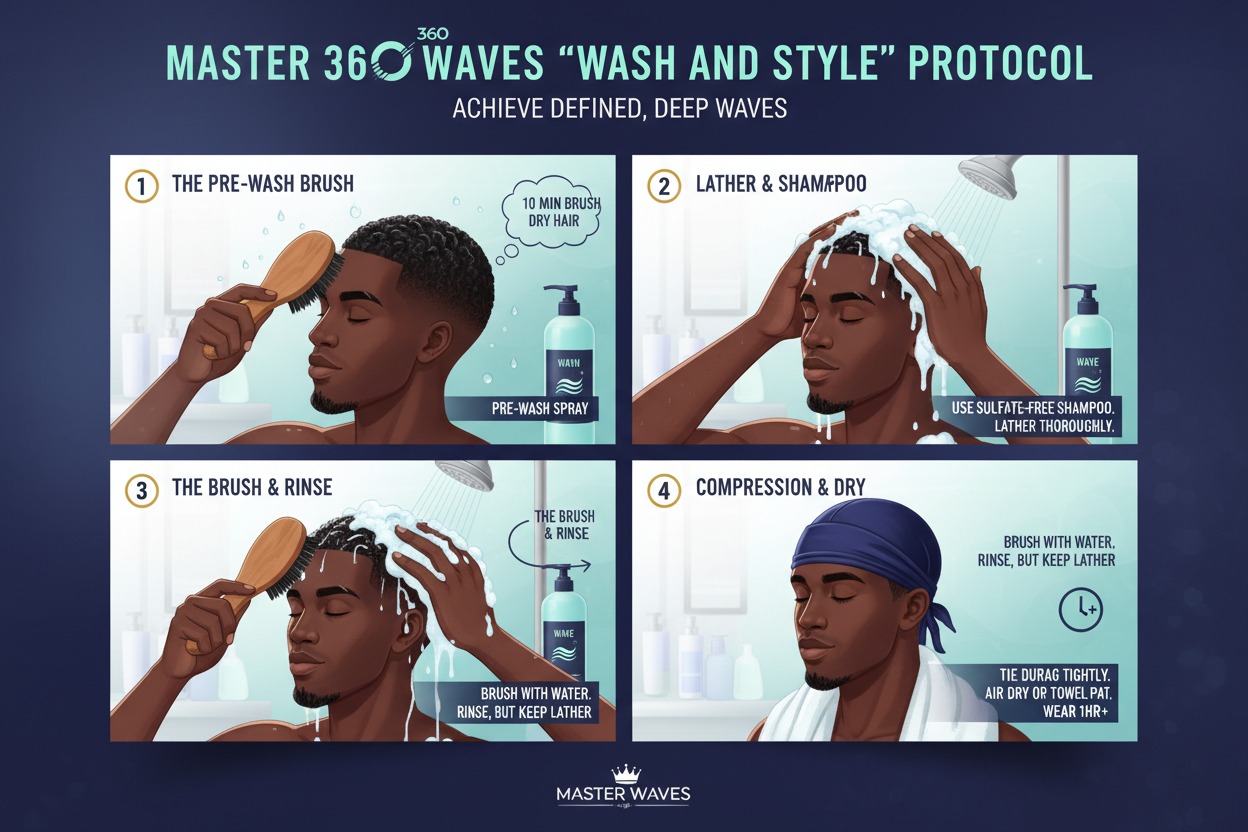
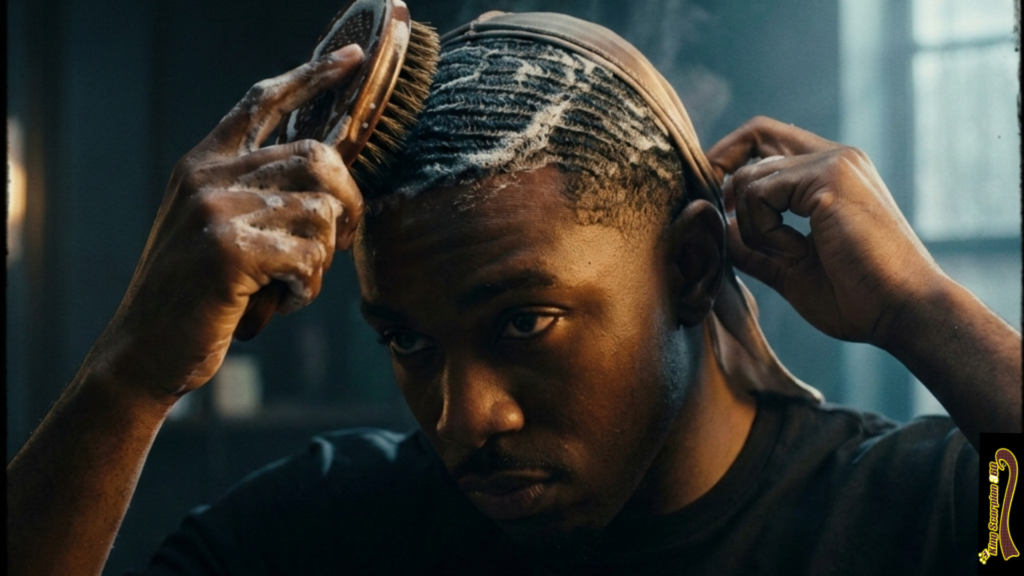
The process shown in the image is the “Wash and Style.” This is arguably the single most effective advanced technique for deep definition and fast progress.
Why it Works:
When your hair is saturated with water and warm lather (from shampoo), it is in its most pliable state. Brushing in this state allows you to stretch the pattern with extreme ease. When the hair dries while compressed with a durag over the lather, it “sets” the pattern deeper than any dry brushing session can.
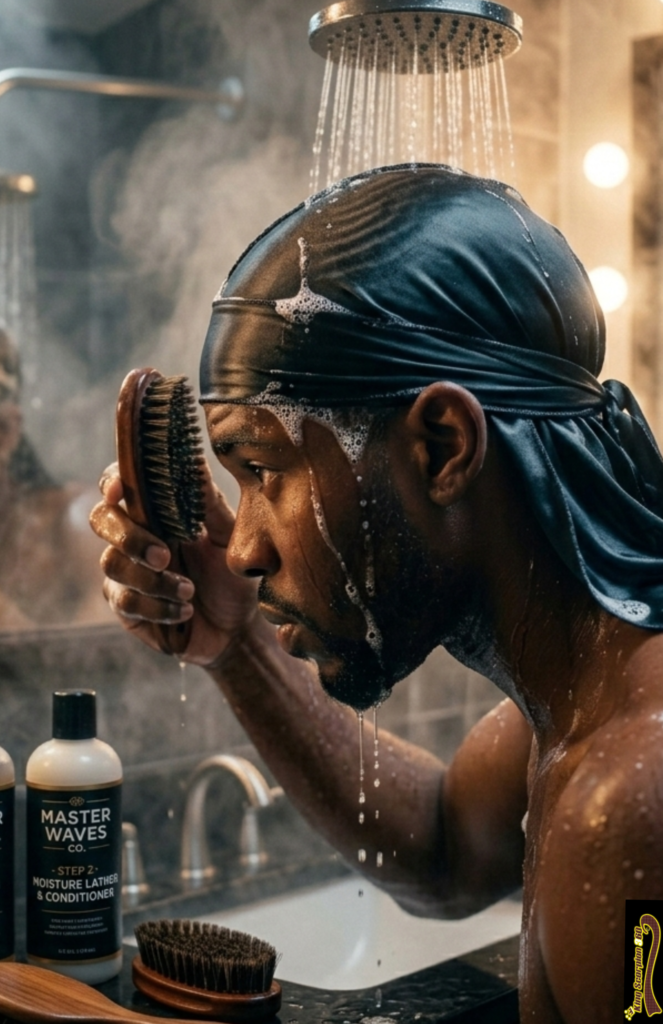
The Wash and Style Steps:
- Drench Hair: Wet your hair thoroughly with warm water.
- Apply Shampoo: Use a quality moisturizing shampoo to build a rich lather (as seen in the photo).
- Brush: Grab your medium or hard brush and start your full brush routine through the lather. Make sure your angles are perfect.
- Rinse (Crucial!): Do not wash the shampoo out before this step. Put your durag on directly over the lathered hair. Then, rinse your head under the shower with the durag on. This forces the soap out while keeping the hair 100% compressed and aligned.
- Dry: Let your hair air-dry completely with the durag still on. Once you take it off, your waves will be deep, defined, and extremely laid.
Phase 5: Consistency and Wolfing
The final key is patience. Waves take time. You will not see a perfect connection in one week. Dedication means brushing for 15–30 minutes, 2–3 times a day, every single day.
What is “Wolfing”?
Wolfing is the practice of deliberately letting your hair grow long (to a 3 guard or higher) without a haircut for 4–12 weeks. While your waves will look “blurry” on top, this thickness allows you to train the deep, underlying layers. When you finally get that “fresh cut,” your waves will be deeper and more defined than ever before. This is the path to “elite” waves.
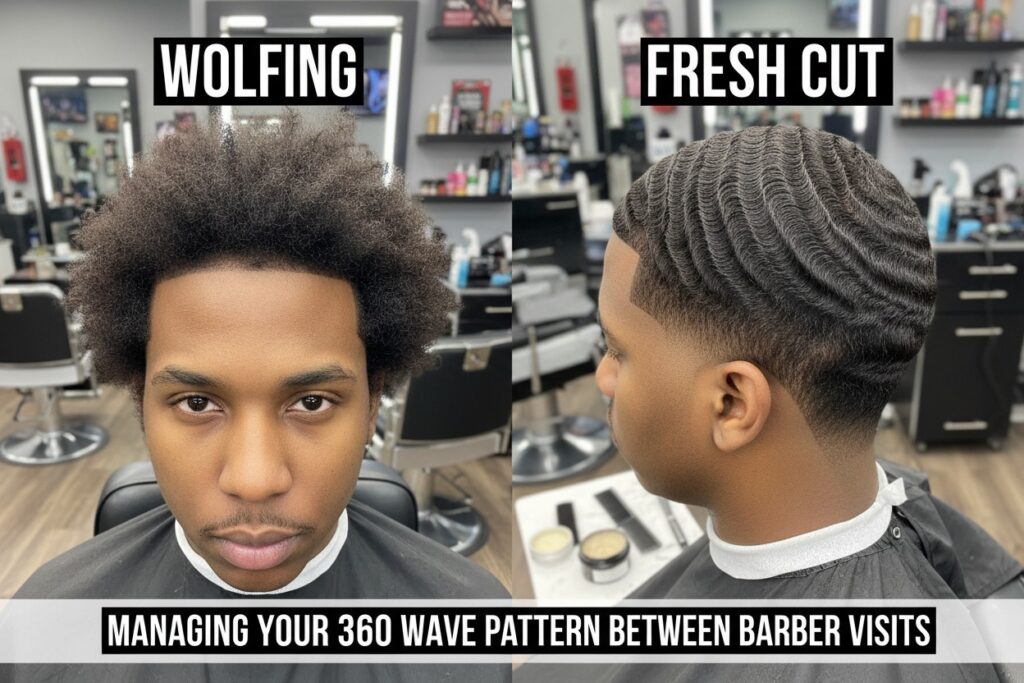
Wolfing vs. Fresh Cut: Managing Your Pattern Between Barber Visits
The wave journey is a pendulum swinging between two extremes: the crisp, flawless perfection of a Fresh Cut and the rugged, grueling discipline of Wolfing.
Most wavers look great when they step out of the barbershop. But the true masters—the ones with 3D depth and flawless connections—know how to manage their pattern when the hair gets thick and starts fighting back. The secret to elite waves isn’t just how you brush; it’s how you adapt your routine to the length of your hair.
Here is the master guide to navigating the three distinct phases between barber visits without losing your progress.
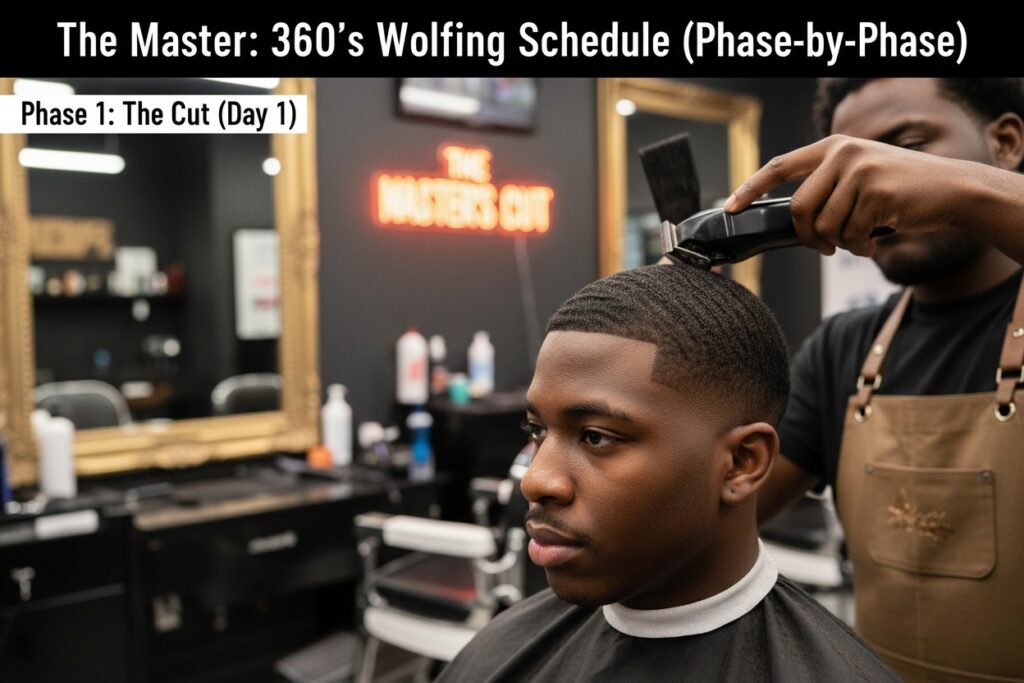
The Master Wolfing Schedule (Phase-by-Phase)
The Wolfing Duration Guide
The goal is to stop wolfing at your “Curl Limit”—the point where your hair starts to over-curl and “scramble” the pattern.
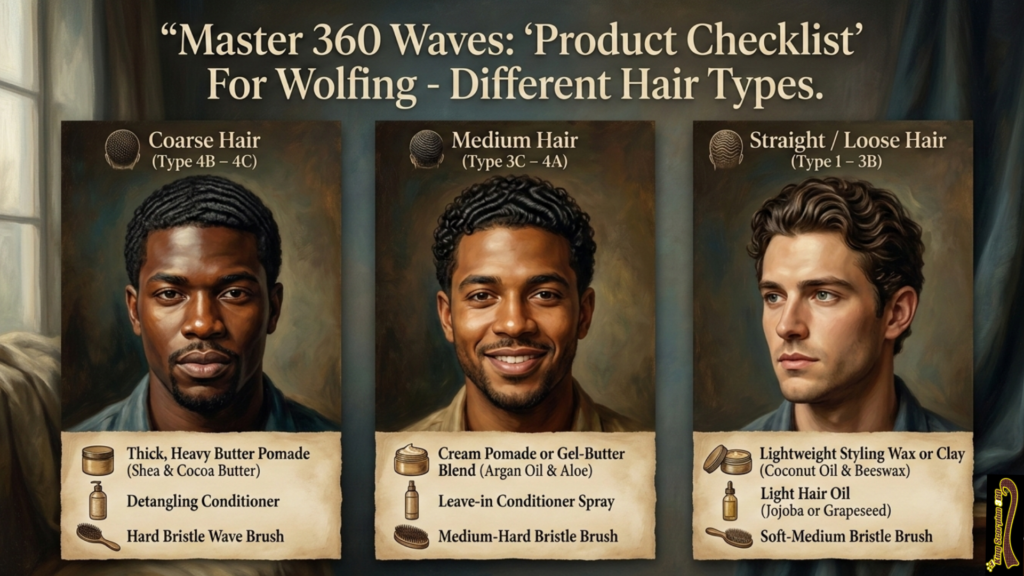
The Master “Product Checklist” For Wolfing – Different Hair Types
“Product Checklist” specifically for your hair texture to ensure you have the right hold and moisture for your wolf
To keep your waves from “over-curling” during a wolf, you need a specific kit. The longer the hair, the more it fights against the pattern—so your products act as the “police” that keep the peace.
Find your texture
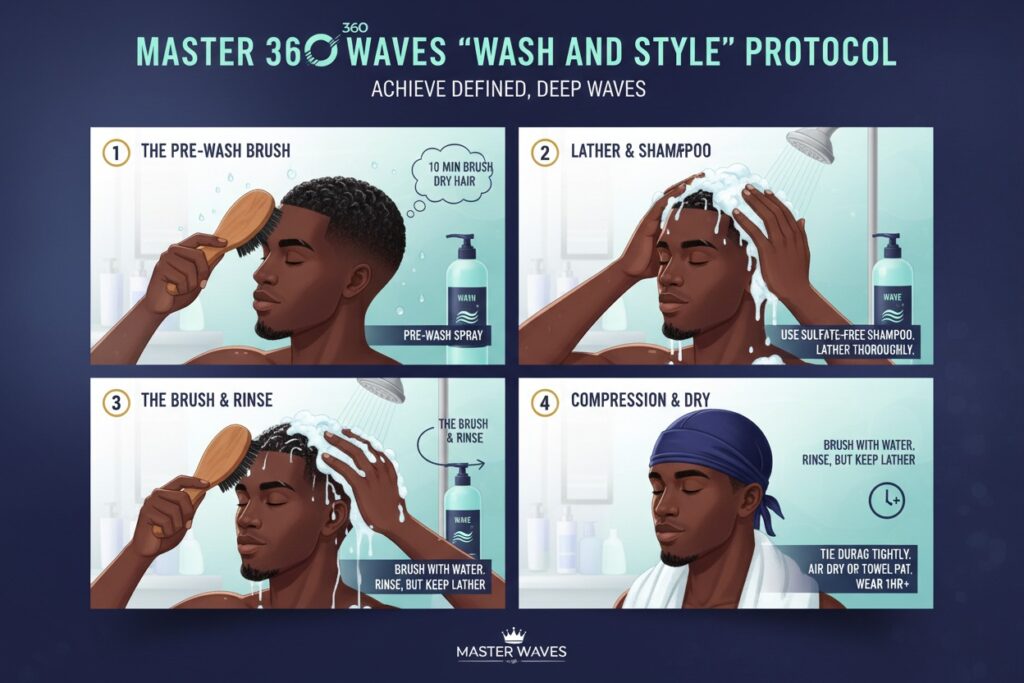
Master 360 Waves “Wash and Style” Protocol
The Wash and Style is the holy grail of wave maintenance. It is the one time your hair is at its most elastic and cooperative. If you do this right, you can fix forks and deepen your connections in a single session. If you do it wrong, you’ll frizz up your pattern and have to start over.
Here is the step-by-step master routine.
More 360 Wave Care Tips
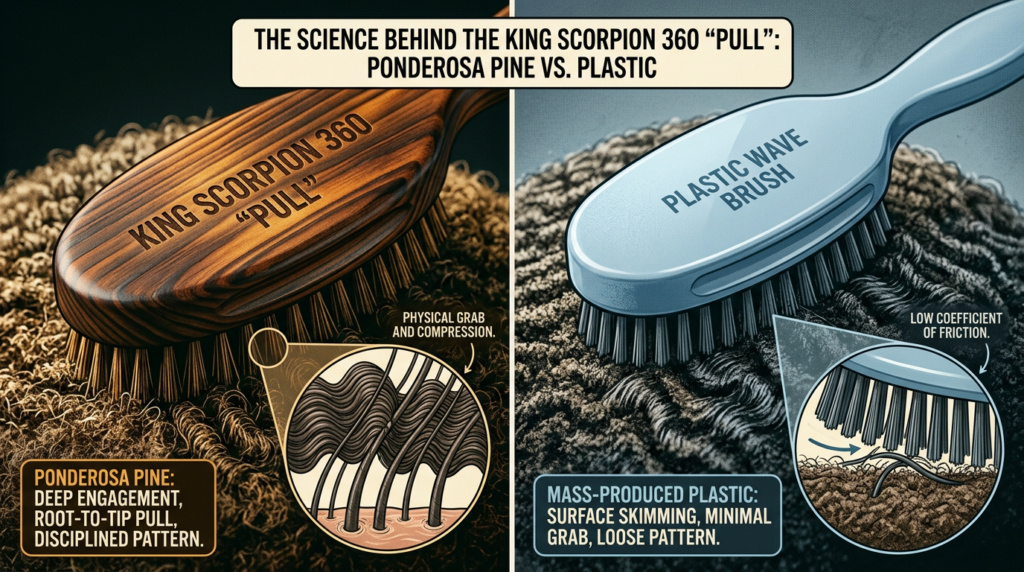
Ponderosa Pine vs. Plastic: The Science Behind the King Scorpion 360 “Pull”
In the world of elite 360 waves, the “pull” is everything. It is the tactile sensation of a brush grabbing hair from the root and shifting it into a disciplined pattern. While mass-produced plastic brushes dominate the shelves of big-box retailers, serious wavers and master craftsmen are increasingly turning toward a more traditional, high-performance material: Ponderosa Pine.
But why does a King Scorpion 360 feel fundamentally different than a standard plastic brush? The answer lies in the intersection of physics, material science, and the specific anatomy of the King Scorpion design.
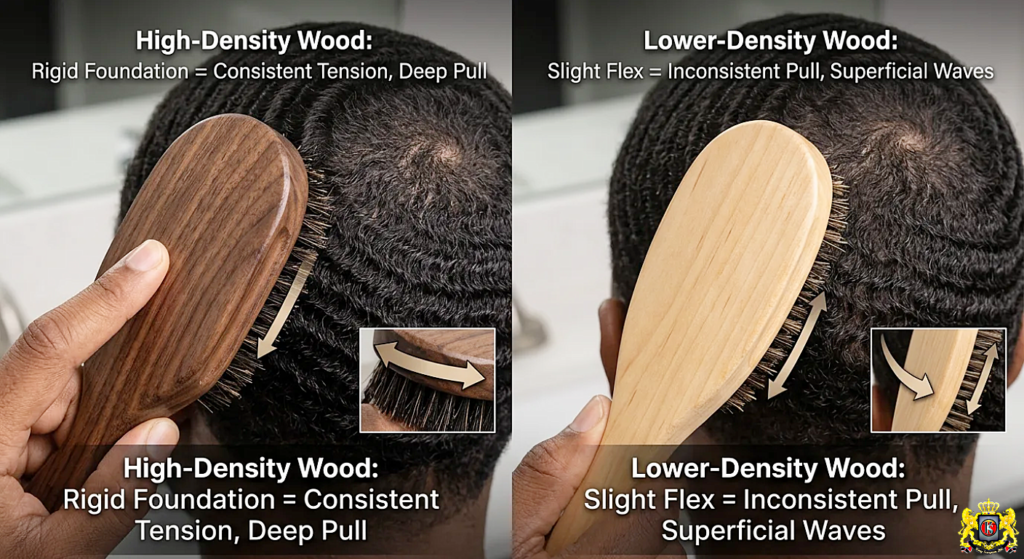
The Foundation of the Pull: How Wood Density Impacts Your 360 Waves Pattern
In the world of elite waving, the “pull” is everything. It’s that specific mechanical tension where the bristles grab the hair at the root and stretch it into the desired 360 pattern. While most focus on the bristles themselves, the choice of wood is the unsung hero that determines how that tension is delivered to your scalp.
Here is why the high-quality wood used in a King Scorpion 360 makes a functional difference:
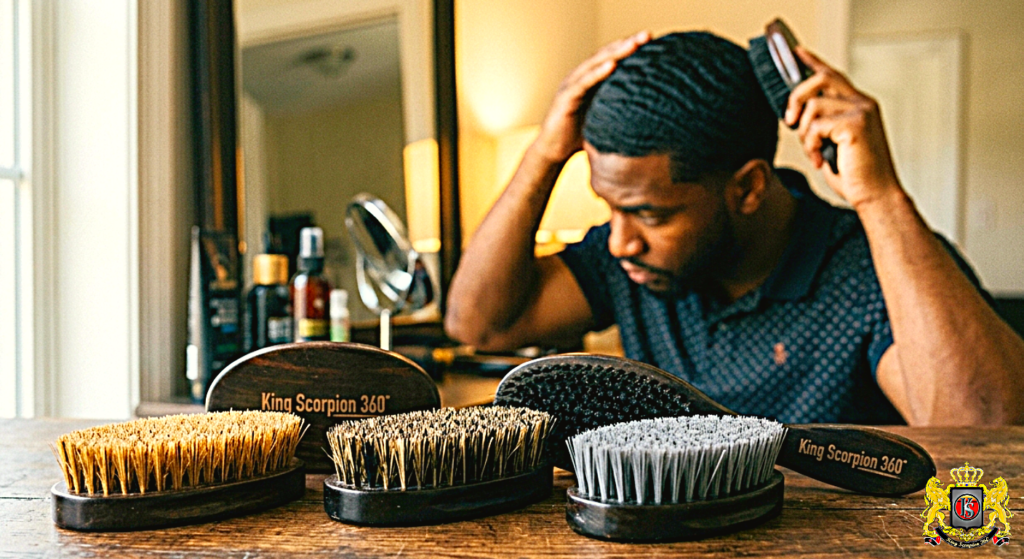
How to Order a King Scorpion 360 Custom Wave Brush
How to Order a King Scorpion 360 Custom Wave Brush
When looking to enhance your grooming routine, especially for achieving the perfect 360 waves, a custom-made King Scorpion 360 Wave Brush can be an excellent choice. Here’s what you need to know before placing your order to ensure you get the best brush tailored to your needs.
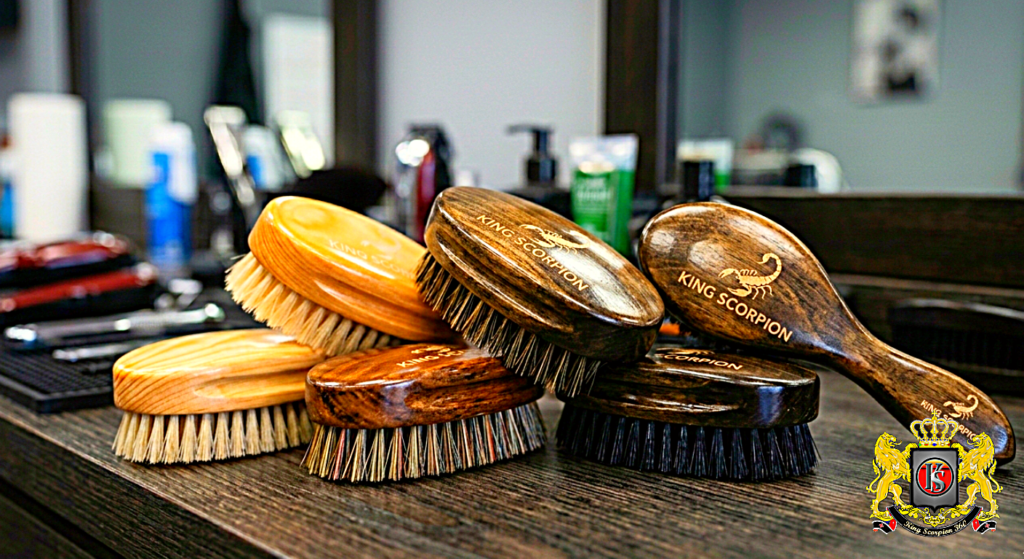
Why Is the King Scorpion 360 Wave Brush Expensive?
Discover why the King Scorpion 360 Wave Brush is worth the investment. Crafted with precision and advanced technology, this brush delivers exceptional quality and durability. With its reputation for excellence and its ability to create well-defined waves, it’s more than just a grooming tool—it’s a symbol of prestige and style. Find out why this brush is worth every penny and take your grooming experience to new heights. Shop online from trusted sites to ensure authenticity and compare prices for the best deal. Achieve flawless 360 waves with the King Scorpion 360 Wave Brush.
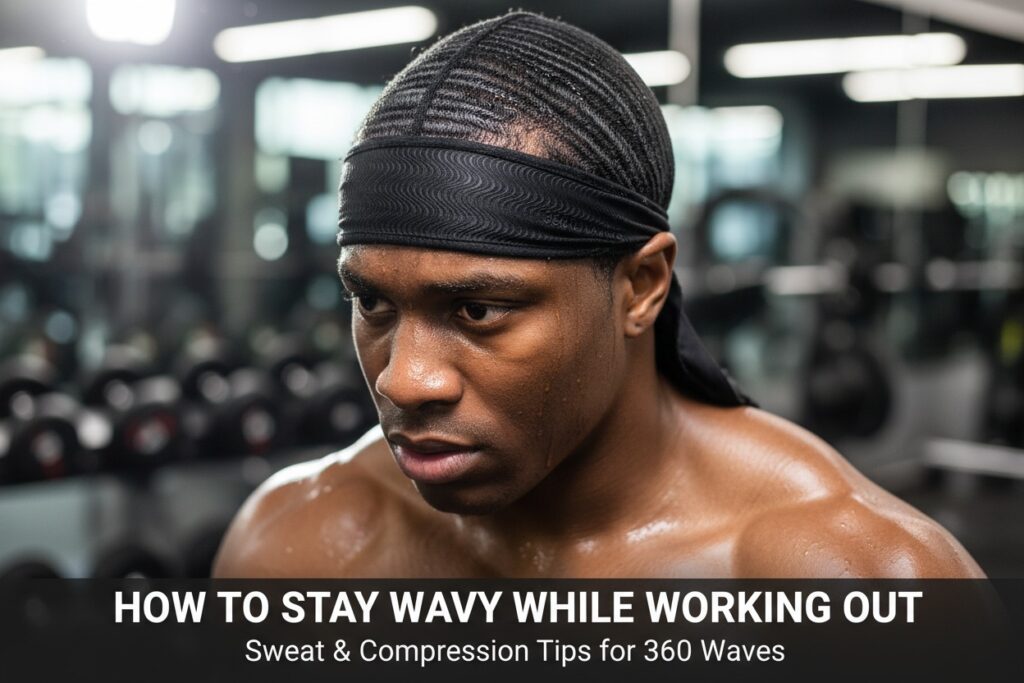
How to Keep Your 360 Waves Looking Good While Working Out: Sweat and Compression Tips
Maintaining deep, connected 360 waves requires a level of discipline that often feels at odds with a high-intensity fitness routine. Salt-heavy sweat can dry out hair, while movement can shift your pattern, potentially undoing weeks of “wolfing” progress in a single session.
However, fitness and waves aren’t mutually exclusive. By treating your workout as a specialized maintenance phase rather than an obstacle, you can preserve your progress while hitting your personal bests.
Wolfing vs. Fresh Cut: Managing Your Pattern Between Barber Visits
The wave journey is a pendulum swinging between two extremes: the crisp, flawless perfection of a Fresh Cut and the rugged, grueling discipline of Wolfing.
Most wavers look great when they step out of the barbershop. But the true masters—the ones with 3D depth and flawless connections—know how to manage their pattern when the hair gets thick and starts fighting back. The secret to elite waves isn’t just how you brush; it’s how you adapt your routine to the length of your hair.
Here is the master guide to navigating the three distinct phases between barber visits without losing your progress.
Discover more from King Scorpion 360
Subscribe to get the latest posts sent to your email.