
Wolfing vs. Fresh Cut: Managing Your Pattern Between Barber Visits
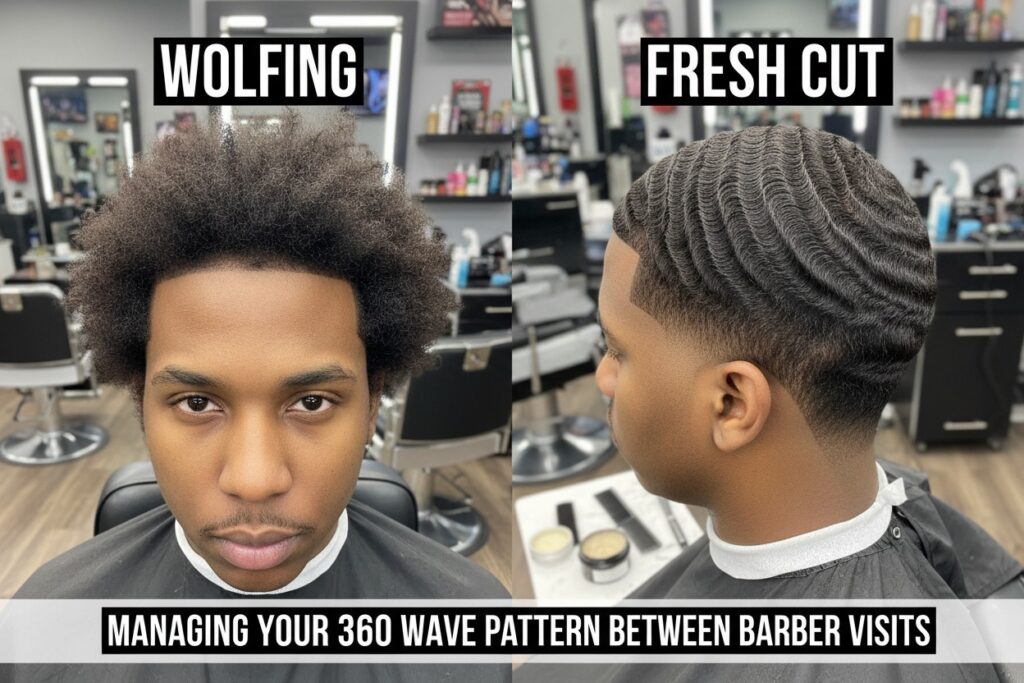
The wave journey is a pendulum swinging between two extremes: the crisp, flawless perfection of a Fresh Cut and the rugged, grueling discipline of Wolfing.
Most wavers look great when they step out of the barbershop. But the true masters—the ones with 3D depth and flawless connections—know how to manage their pattern when the hair gets thick and starts fighting back. The secret to elite waves isn’t just how you brush; it’s how you adapt your routine to the length of your hair.
Here is the master guide to navigating the three distinct phases between barber visits without losing your progress.
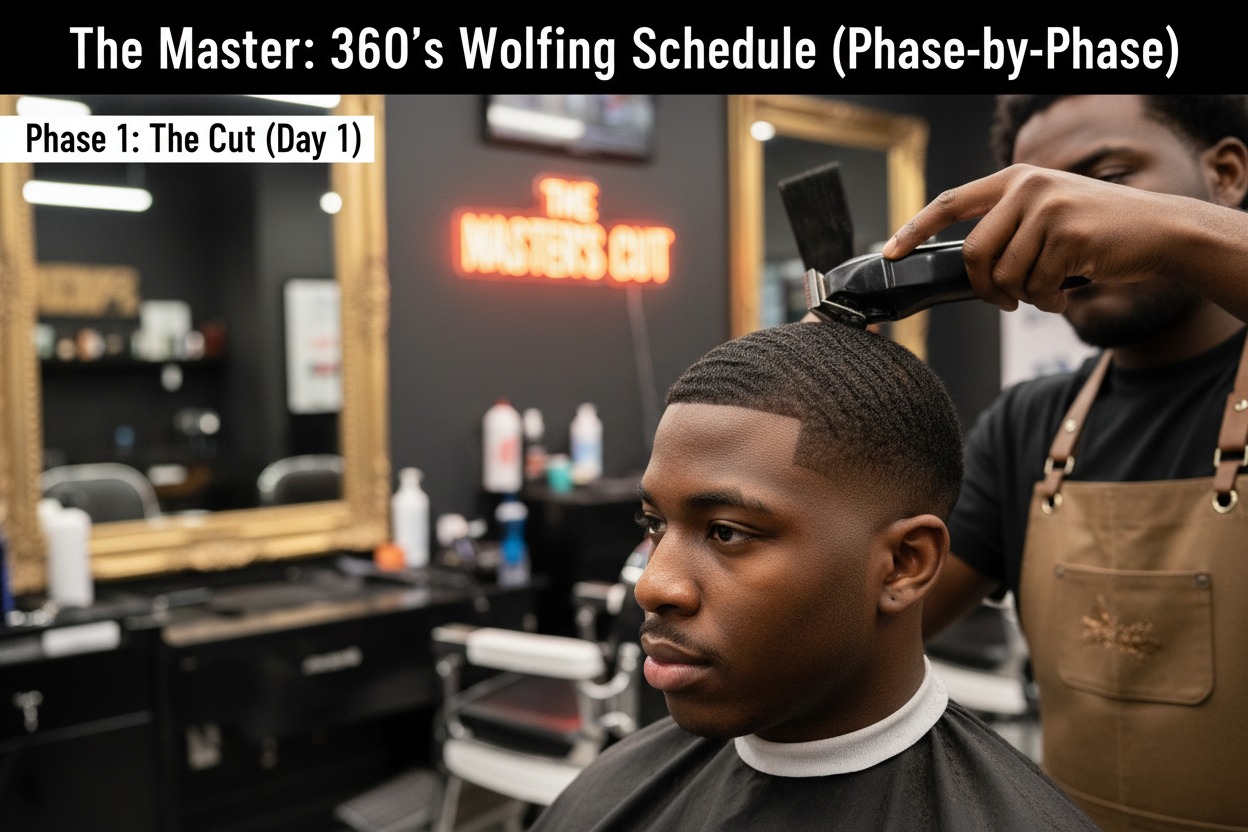
Phase 1: The Fresh Cut (The Honeymoon)
Duration: Days 1 to 14. You just left the shop. The fade is blurry, the hairline is crispy, and your waves are popping. It is tempting just to throw on a durag and relax. Do not get lazy. This is the most critical time to perfect your angles because your scalp is exposed and your mistakes will be instantly visible.
- The Challenge: Scalp irritation and pattern shifting. Because the hair is so short, aggressive brushing can damage your skin and literally push your wave lines out of place.
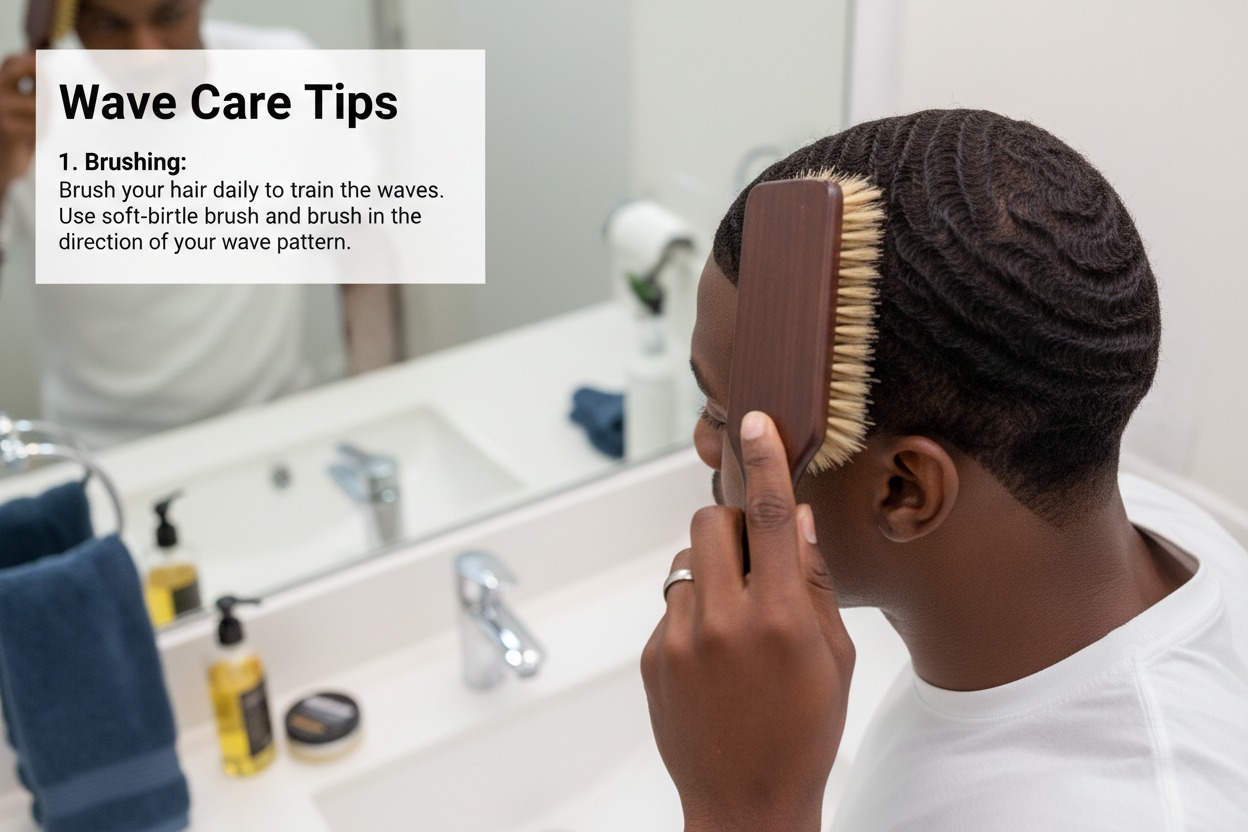
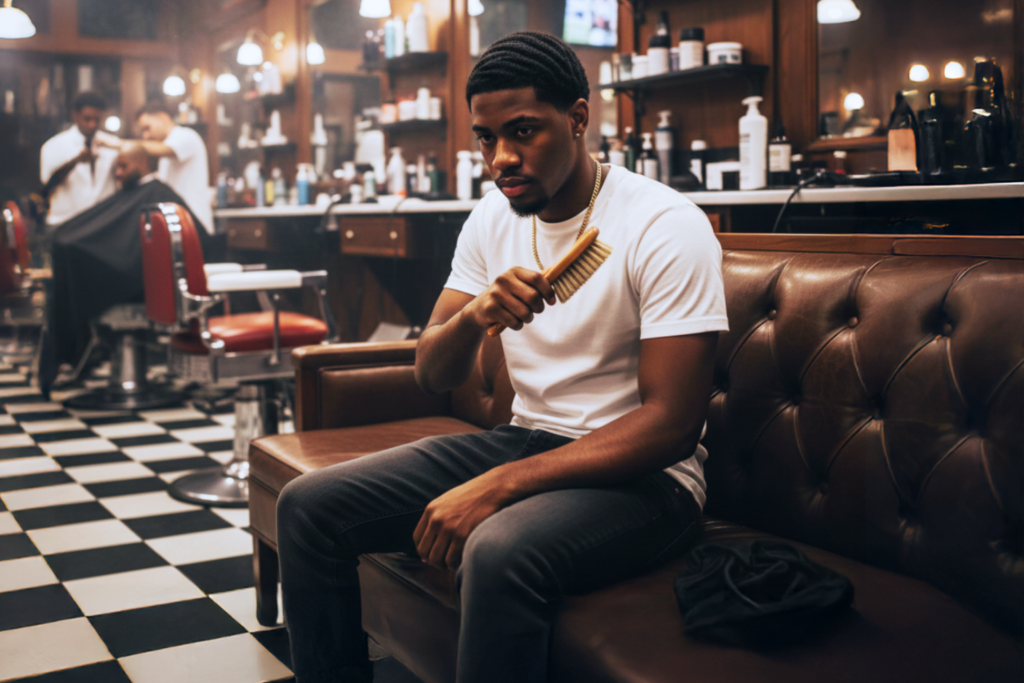
- The Tools: Put the hard brush away. You only need a Soft Boar Bristle Brush.
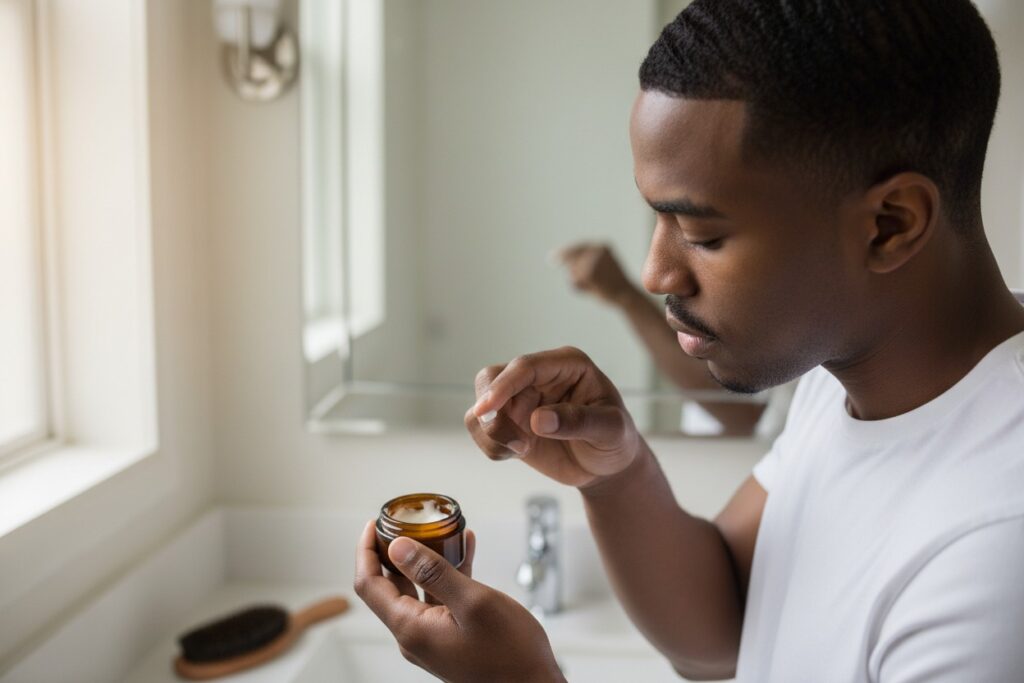
- The Products: Keep it incredibly light. Heavy pomades will clog your pores and make your scalp look greasy. Stick to a daily mist of water or a light leave-in conditioner, sealed with a few drops of natural oil (like Argan or Sweet Almond).
- The Goal: Focus on precision. Use your mirrors to ensure your angles are absolutely perfect. You are laying the foundation for the next two months.
Phase 2: The Transition (The “Ugly” Stage)
Duration: Weeks 3 to 5. The honeymoon is over. Your hair is growing, lifting off the scalp, and starting to look fuzzy. The sharp contrast of your fresh cut is fading, and you might feel the urge to run back to the barber. Hold the line.
- The Challenge: Frizz and loss of definition. Your hair is transitioning from lying flat to trying to curl back on itself.
- The Tools: Upgrade to a Medium Brush. A soft brush will no longer reach the bottom layers of your hair, leaving the top smooth but the roots tangled.
- The Products: It’s time to introduce a little more “hold.” Start using a medium-hold natural butter or pomade to keep the new growth laid down.
- The Goal: Start implementing the Wash and Style method once a week. This will force the new growth to submit to the pattern and keep the frizz under control.
Phase 3: The Heavy Wolf (The Boss Level)
Duration: Weeks 6+ You are deep in the trenches. Your hair is thick, dark, and heavy. If you run your hand over your head, it feels like a thick carpet. This is where the magic happens—and where the weak give up. This phase is purely about creating depth and fixing forks.
- The Challenge: “Over-curling” and internal tangles. The hair is so long that it wants to form afro-coils instead of wave ripples.
- The Tools: You absolutely must use a Hard Brush to penetrate to the scalp. However, brushing alone is no longer enough. You must introduce the Comb.
- The Products: Heavy hitters only. You need thick moisturizers (like Shea butter or heavy leave-in creams) and strong-hold pomades to lock the thick hair into place.
- The Goal: Comb With The Grain (WTG) for 10 minutes before every brush session to detangle the deep layers. Double compress at night (a silky durag with a wave cap on top) to handle the immense pressure of the thick hair trying to rise.
| Factor | Phase 1: Fresh Cut (0-2 Wks) | Phase 2: Transition (3-5 Wks) | Phase 3: Heavy Wolf (6+ Wks) |
| Primary Brush | Soft Brush | Medium Brush | Hard Brush |
| Combing | Never | Rarely (Only to fix forks) | Mandatory (Daily before brushing) |
| Compression | Light (Single Durag) | Medium (Single Durag) | Heavy (Durag + Wave Cap) |
| Wash & Style | Skip (wash normally) | 1x a week | 2x a week |
| Product Weight | Light Oils / Mists | Medium Butters / Lotions | Heavy Pomades / Thick Creams |
The Golden Rule of the Transition
The biggest mistake you can make is treating Phase 3 hair with Phase 1 tactics. If you try to manage a 6-week wolf with a soft brush and a light oil, your hair will completely rebel. You have to escalate your tools and products as your hair’s resistance escalates.
Walking into the barbershop after an 8-week wolf with a head full of heavy pomade and tangled roots is a recipe for disaster. If your hair is gunked up, the clippers will snag. If your roots are tangled, the barber’s guard will pull the hair up and chop it off at the base, ruining your depth.
To ensure your months of hard work translate into a flawless, 3D fresh cut, your hair needs to be clean, detangled, and perfectly laid before the clippers ever turn on.
Here is your exact 24-Hour Barber Prep Checklist.
T-Minus 24 Hours: The Deep Cleanse
You must strip all the heavy butters, pomades, and sweat out of your hair. Barbers hate cutting greasy hair, and clippers cannot give a precise cut if they are gliding over layers of wax.
- The Action: Perform a full Wash and Style.
- The Goal: Use a clarifying shampoo to strip the buildup, but keep the durag on during the rinse so the pattern stays locked in its natural, clean state.
T-Minus 12 Hours: The “Naked” Brush Session
Once your hair is completely dry from the Wash and Style, it’s time to set the final pattern.
- The Action: Do a 20-minute brush session using your medium or hard brush.
- The Rule: NO POMADE. Do not put any heavy hold products in your hair. Apply only 3 to 4 drops of a very light natural oil (like Argan or Sweet Almond) just to give it a healthy shine. You want the hair to be “naked” so the clippers can catch every strand evenly.
T-Minus 2 Hours: The Final Detangle
Even with a Wash and Style, wolfing hair can cross over itself. If a hair strand is laying diagonally across your wave pattern when the clippers hit it, it will create a bald spot or a fork.
- The Action: Take your wide-tooth comb and comb your hair strictly With The Grain (WTG) for 5 minutes.
- The Finish: Follow up immediately with a soft brush for 10 minutes to lay all those freshly separated strands perfectly parallel to each other.
T-Minus 1 Hour: The Lockdown
Your hair is now clean, oil-light, and perfectly parallel. It is in its most vulnerable state because there is no pomade holding it down.
- The Action: Put on your best, tightest silky durag. Add a wave cap on top for double compression.
- The Rule: Do not take it off. Drive to the barbershop, sit in the waiting area, and keep it on until the barber actually taps the chair for you to sit down.
💺 In the Chair: The Hand-Off
When you finally sit down and untie the durag, your hair will look like a flawless, deep ocean. This does two things: it shows the barber exactly where your wave lines naturally fall, and it commands respect for the work you’ve put in.
Before they turn the clippers on, run through this final checklist with them:
- [ ] Guard Length confirmed: “Let’s do a 2.0 (or 2.5) guard.”
- [ ] Direction confirmed: “Strictly WTG (With The Grain) all around.”
- [ ] Crown protected: “Please go one guard higher on the crown so it doesn’t thin out.”
If you prep your canvas perfectly, your barber’s job becomes incredibly easy, and your waves will look deeper than they ever have.
“Fresh-Cut Shock”—the crucial first 48 hours after a haircut, where your waves might temporarily look a little light or frizzy
You just got home from the shop. You look in the mirror, and for a split second, you panic. Your waves look “thinner” or “lighter” than they did when you were wolfing. This is Fresh-Cut Shock.
Because you just removed 8 weeks of bulk, your hair is lighter and less compressed. Those top layers that were holding everything down are gone, and your hair wants to “spring” back up. If you don’t act fast, your waves will frizz up, and you’ll lose that crisp definition within 48 hours.
Here is your Fresh-Cut Recovery Plan to lock that pattern back in immediately.
The First 48 Hours: The Lockdown Phase
1. The Immediate Oil Strike (Hour 1)
Your barber just ran hot clippers and potentially alcohol-based sprays across your scalp. Your hair is bone-dry, and your pores are open.
- The Action: Apply a high-quality, lightweight oil (Argan or Jojoba) immediately.
- Why: You need to soothe the scalp and “grease the gears” so your hair doesn’t get brittle and snap now that it’s short.
2. Resistance Training (The Soft Brush Only Rule)
For the first 2 days after a cut, your scalp is tender, and your hair is at its shortest.
- The Action: Put the hard and medium brushes in the drawer. You must only use a Soft Boar Bristle Brush.
- Why: Using a hard brush on a fresh cut can cause “scalp burn” and actually scratch away the top layer of your wave pattern. A soft brush is enough to keep the short hairs laid without irritating the skin.
3. The 48-Hour Compression Marathon
After a cut, your hair is “confused.” It no longer has the weight of the wolf to keep it down.
- The Action: Stay “ragged up” as much as possible for the first two days.
- The Schedule: Sleep in your durag, and if you’re staying home, keep it on. Only take it off for your brief soft-brush sessions.
- The Result: This “freezes” the pattern at its new, shorter length.
| Goal | Method | Frequency |
| Moisture | Light Oil (No heavy pomades yet) | Twice daily |
| Brushing | Soft Brush only (Strictly WTG) | 10-15 mins / session |
| Laying Edges | Plastic Bag Method | After every brush session |
| Compression | Silky Durag | 20+ hours a day (for 2 days) |
🛑 What NOT to do after a Fresh Cut
- Don’t Wash and Style: Wait at least 3 to 4 days before your first wash. Your hair is too short to handle the agitation, and you’ll just end up with a frizzy mess.
- Don’t apply heavy Pomade: Your hair is short enough to lay down on its own with just oil and a durag. Heavy wax will just sit on your scalp and cause “waves acne” (breakouts).
- Don’t “Over-Brush”: You can’t brush waves into existence when the hair is this short. You are just maintaining the lines that are already there. 15 minutes is plenty.
Summary:
Treat your hair like a newborn for the first 48 hours. Keep it moisturized, keep it covered, and use the softest tools possible. By day 3, the “shock” will wear off, your scalp will settle, and those deep trenches will start to look “seasick” again.
“Growth Goal” calendar so you know exactly when your next wolfing phase should end for maximum results
To maximize your depth, you can’t just brush aimlessly; you need a strategic timeline. If you cut too soon, you lose progress. If you wolf too long without a plan, your hair “over-curls” and your waves turn into a mess of forks.
Here is your Elite Wolfing Calendar. This is designed to take you from a fresh cut to “Ocean Status” over a 10-week cycle.
📅 The 10-Week Growth Goal Calendar
Weeks 1–2: The Foundation (The “Fresh” Phase)
- Focus: Perfecting angles.
- Routine: Soft brush only. 15-minute sessions.
- Key Move: Use the Plastic Bag Method daily. Your hair is short, so you want it to lay as flat as humanly possible to set the “tracks.”
Weeks 3–5: The Transition (The “Ripple” Phase)
- Focus: Connection building.
- Routine: Switch to a Medium Brush. 20-minute sessions.
- Key Move: Start your weekly Wash and Style. This is when you’ll start to see your waves connecting from the top to the sides.
Weeks 6–8: The Deep Wolf (The “Heavy” Phase)
- Focus: Carving depth.
- Routine: Upgrade to a Hard Brush. 30-minute sessions.
- Key Move: Mandatory Combing. Spend 5 minutes combing WTG (With The Grain) before you brush to reach the roots. This is where your waves get “deep.”
Weeks 9–10: The Boss Level (The “Struggle” Phase)
- Focus: Maximum Compression.
- Routine: Hard brush followed by a Soft brush to lay the frizz.
- Key Move: Double Compression. Silky durag + Wave cap every night. If your hair “lifts” during the day, use a hot towel to lay it back down.
| Week | Length Goal | Brush Type | Target Goal |
| Week 2 | 1.5 – 2.0 Guard | Soft | Crisp Line-up & Shine |
| Week 5 | 2.5 – 3.0 Guard | Medium | Close all “Forks” |
| Week 8 | 3.5 – 4.0 Guard | Hard | Visible 3D Depth |
| Week 10 | “The Forest” | Hard + Comb | Perfect 360 Flow |
🚨 The “Cut or Keep” Test
At Week 8, ask yourself these three questions:
- Can I still see my scalp when I part my hair? (If yes, keep wolfing).
- Is my hair “over-curling” even after a Wash and Style? (If yes, it’s time to cut).
- Are my connections blurry? (If yes, you need 2 more weeks of heavy combing).
Pro Tip: Never book your barber on a whim. Book your appointment for the end of Week 10 right now. Having a deadline forces you to stay disciplined during those itchy, “ugly” weeks of the wolf.
“Wave Progress Journal” template for you, so you can track your brush sessions and hair health every day of this 10-week cycle
To reach the elite level, you have to treat your waves like a fitness goal. Consistency is the only way to turn ripples into trenches.
This Wave Progress Journal is designed to keep you accountable. Copy this into your notes app or a physical notebook and fill it out daily to track exactly how your hair is responding to the 10-week cycle.
📓 The Master Wave Journal (Daily Template)
Date: [Insert Date] | Wolfing Week: [1-10] | Porosity Type: [Low/Med/High]
1. The Session Tracker
- Morning Brush:
[ ]10 mins (Soft/Medium)
- Evening Brush:
[ ]20-30 mins (Hard/Medium)
- Combing (Weeks 6+):
[ ]5 mins (WTG)
- Plastic Bag Finish:
[ ]5 mins
- Total Brush Time:
[ ]_______ mins
2. Moisture & Health
- Products Used:
__________________________
- Hydration Level:
[1-5](1 = Dry/Crunchy, 5 = Silky/Soft)
- Scalp Health:
[ ]Clear[ ]Itchy[ ]Dry/Flaky
3. The Pattern Check (Weekly Focus)
- Current Weak Spot:
[e.g., Right Side / Crown / Forks]
- Progress Note:
____________________________________(Note: Use your hand mirror to check your crown specifically!)
🏆 The “Power Week” Checklist
At the end of every week, check off these milestones to ensure you’re on track for your Week 10 goal.
| Week | Milestone | Completed? |
| 1-2 | Angles are locked in; no shifting during brushing. | [ ] |
| 3-4 | Weekly “Wash & Style” completed; hair feels trained. | [ ] |
| 5-6 | Hard brush is reaching the scalp without pain. | [ ] |
| 7-8 | Forks are being combed out; pattern is connecting. | [ ] |
| 9-10 | Double compression is holding the wolf down 100%. | [ ] |
💡 Quick Tips for the Journal
- The Mirror Test: Every Sunday, take a high-quality photo of your waves in natural lighting. Compare it to the previous Sunday. If you don’t see a change, you need to increase your brush time by 5 minutes.
- Be Honest: If you missed a day, note it. It helps you understand why your hair might be “frizzy” or “lost” later in the wolf.
Master Quote: “Waves aren’t caught; they’re taught.” Every minute you spend with that brush is a lesson for your hair.
More 360 Waves Tips
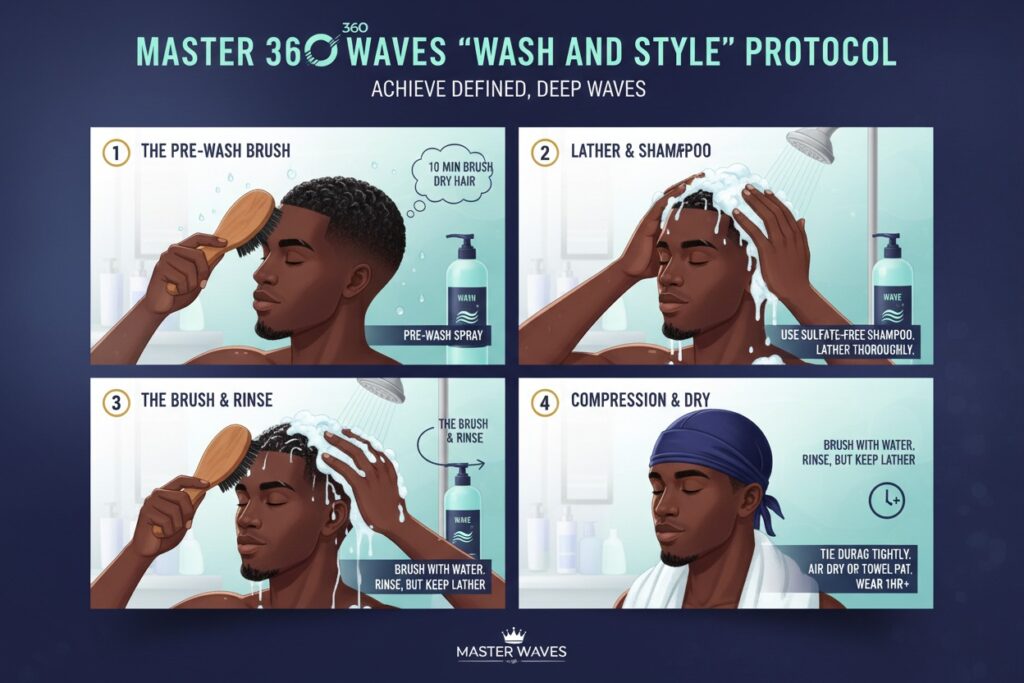
Master 360 Waves “Wash and Style” Protocol
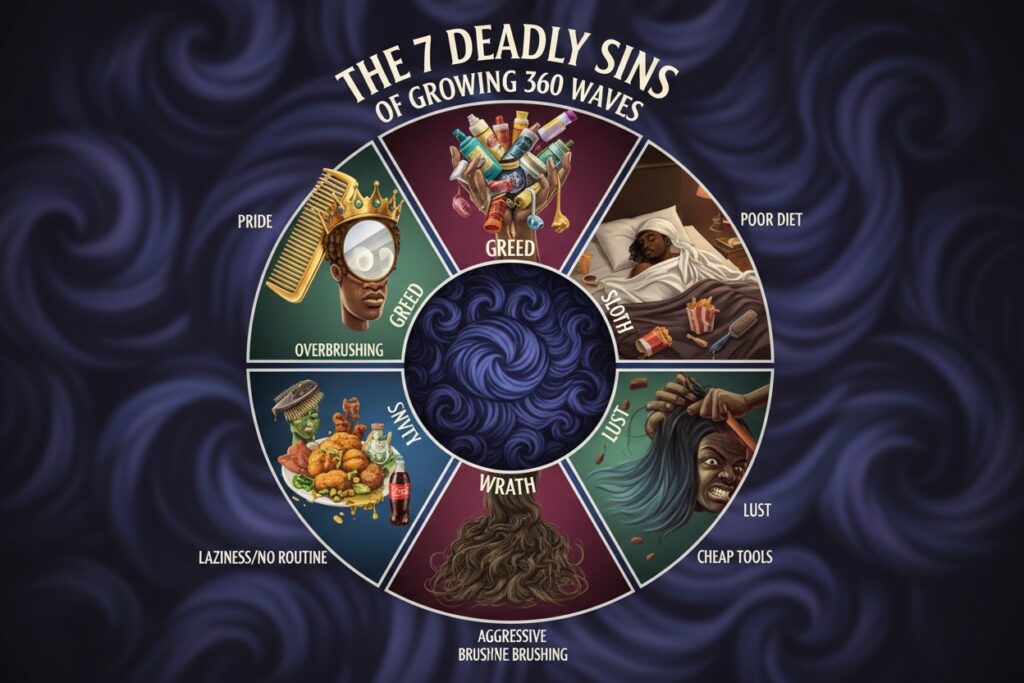
The “7 Deadly Sins” of Growing 360 Waves Master Class Edition
The Master Wave Bible: 2026 Edition
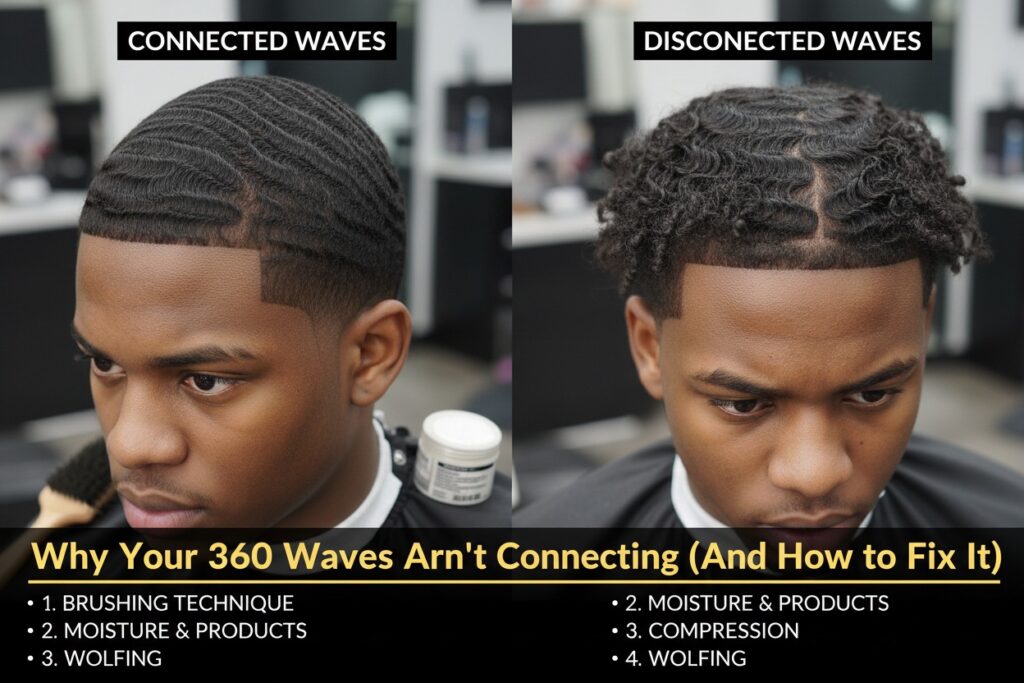
Why Your Waves Aren’t Connecting (And How to Fix It)
360 Wave Theory: Mastered.
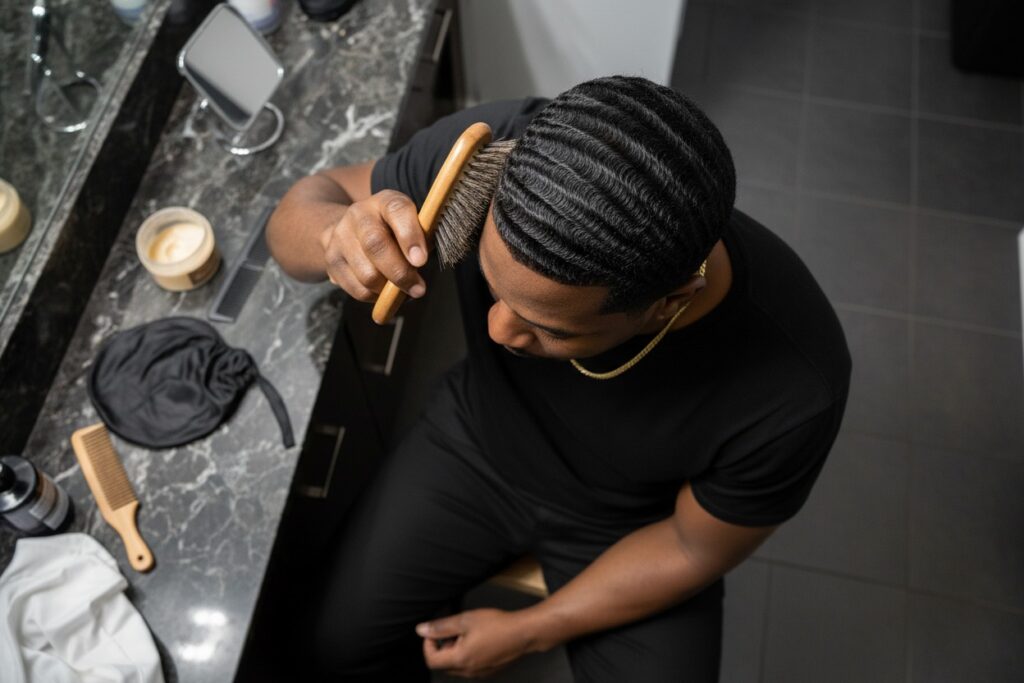
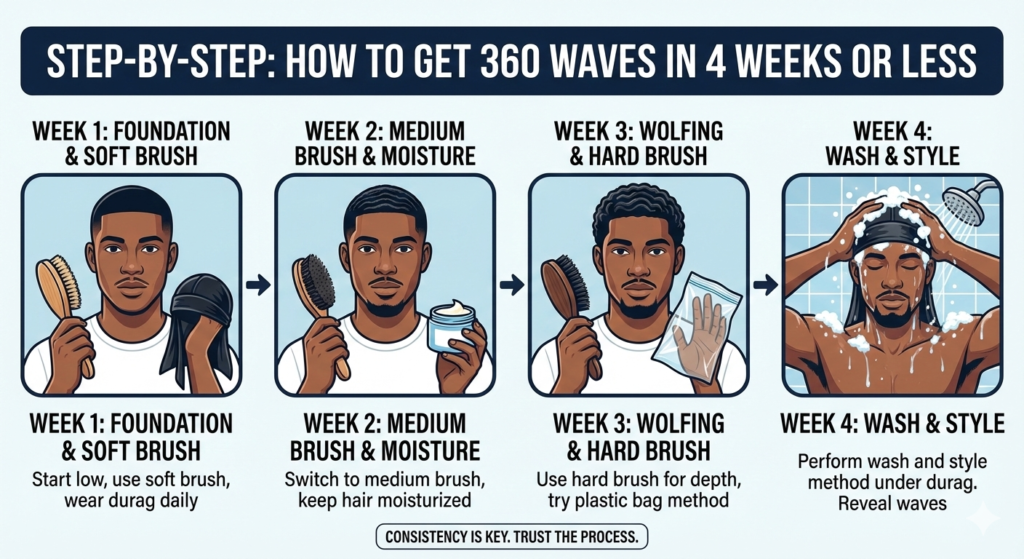
Step-by-Step: How to Get 360 Waves in 4 Weeks or Less
Mastering 360 Waves: When to Use a Soft 360 Wave Brush
Mastering the Perfect Pomade Amount for Flawless 360 Waves
Discover more from King Scorpion 360
Subscribe to get the latest posts sent to your email.